Child Development
Social-Emotional Skills by Age (2–5)

By Dao, Founder · PhD in mathematics, former Director of Data Science at Uber and Capital One · LinkedIn ↗
The short version
- The won’t-share, the hitting, the meltdown over the wrong cup — it’s usually your child being exactly their age, not a sign you’re doing anything wrong.
- Skills arrive on a schedule: real sharing clicks closer to 3½, empathy blooms around 4, and a true sense of fairness keeps growing for years.
- The simplest help is small — put words on the feeling, let a song or timer own the turn, and ask "how do you think she feels?"
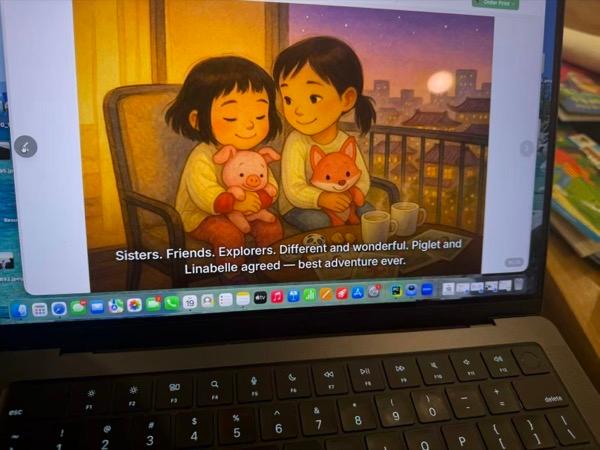
- A story your child stars in lets the lesson land without it ever feeling like school — and the magic is you and the story together, reading it side by side.
Between two and five, kids go from playing beside other children to truly playing with them — taking turns, naming big feelings, noticing when a friend is sad. It’s a huge leap, and it’s bumpy by design. Here’s what’s normal at each age, and the simplest thing that helps.
First, take a breath. So much of what worries us — the won’t-share, the hitting, the full meltdown over the wrong-colored cup — is usually your child being exactly as old as they are, not a sign you’re doing anything wrong. Once you know what a 3-year-old genuinely can’t do yet, a lot of the daily battle just softens.
A quick note: these are general patterns — what most kids do around an age — not a checklist or a test. Every child grows on their own timeline. If something about your child’s development worries you, your pediatrician is the right person to ask.
The quick map: what’s normal at each age
A scan-it-in-ten-seconds version of the ages below — find your child’s age, then read the full section for the how and why.
| Age | What’s new at this age | What helps most |
|---|---|---|
| 2 | Plays beside other kids more than with them. Real sharing hasn’t clicked yet — that comes closer to 3½. Grabbing or biting is a big feeling with no words attached. | Put words on the feeling; keep a duplicate toy handy; keep playdates short and sweet. |
| 3 | Less “me, me, me.” Starts truly playing with other kids and taking real turns — as long as a grown-up is nearby to help. | Let a timer or a song own the turn; coach “use your words.” |
| 4 | Empathy blooms — genuinely feels with others, and begins to grasp that other people have their own inner world. | While you read or play, ask: “How do you think she feels? Why?” |
| 5 | Follows rules and takes turns in real games, and can start talking down a big feeling. A true sense of fairness is still maturing. | Let them help solve the problem; name the mixed feelings (“proud and nervous”). |
What’s normal for a 2-year-old: the side-by-side stage
At two, playing next to other kids instead of with them is completely normal.
Two-year-olds mostly play beside other children — two little worlds, side by side — and only sometimes play with them. That’s right on schedule. Real sharing doesn’t fit in their heads yet; that starts to click closer to three and a half. And the grabbing or biting? It’s almost never meanness — it’s a big feeling with no words attached to it yet. [1, 2]
Try this: Put words on the feeling (“you’re so mad the tower fell”), keep a duplicate toy handy so two kids aren’t fighting over one, and keep playdates short and sweet.
What’s normal for a 3-year-old: the first real turns
Around three, kids get less “me, me, me” and start actually playing with other children.
This is when your child becomes noticeably less self-centered, starts to truly play with other kids instead of beside them, and can take turns and trade toys — as long as a grown-up is nearby to help. They can’t do it alone yet, and that’s fine. [3]
Try this: Let a timer or a song own the turn instead of you (“your turn until the song ends”). Coach “use your words,” and say out loud what both kids want: “you want it, and Mia wants it too. That’s hard.”
What’s normal for a 4-year-old: the one who finally notices you
Four is the tender age — they start to genuinely feel with other people.
Four-year-olds become real little empathizers: when they see someone hurt or sad, they show sympathy and concern. It’s the start of a big shift — they’re beginning to realize that other people have their own thoughts and feelings, separate from what’s in their own head. (Researchers call that last part “theory of mind” — but really it just means “other people have their own inside world.”) [4, 5]
Try this: While you read or play, just ask: “How do you think she feels? Why?” That one little question is empathy practice.
What’s normal for a 5-year-old: the rule-keeper
By five, most kids can follow the rules and take turns in a real game.
Five-year-olds can follow rules and take turns when they play games with other kids, and they can start to talk themselves down from a big feeling. A true sense of fairness is still growing, though — that famous “that’s not fair!” keeps maturing for years yet, getting strong closer to seven or eight — so go easy on expecting perfect fairness at five. [6, 7]
Try this: Let them help solve the problem instead of solving it for them, and name the trickier mixed feelings: “you can feel proud and nervous at the same time.”
Do personalized books actually work?
More than you’d think — and a personalized storybook is the perfect vehicle for it, in more ways than one. A story your child stars in is teaching that never feels like teaching: a child pays far more attention to a hero who is them, and even picks up more words along the way. And the skill is only one of the gifts. Reading it together is pure bonding, it grows a real love of books and learning, and it’s screen-free — good food for their mind instead of one more autoplay video. [9]
It’s also built to make the lesson land: a hero who looks like your child and fumbles first, then figures it out (kids learn more from a hero who struggles and then succeeds than from a perfect one), plus you pausing to ask “how does she feel?” The book gives you the warm way in; you and the story together are the magic. That’s exactly why we make the book where your child is the hero. [10]
Every challenge, in depth
The by-age picture above is the map. When you’re in the thick of one specific moment, here’s the deeper guide for it — what’s normal, what helps, and a real story that shows it.
- Sharing & turn-taking: how to teach a toddler to share
- Big feelings: the emotional 3-year-old
- Listening: why your toddler won’t listen — and how to be heard without yelling
- The dreamer: the child in her own little world — daydreaming, dawdling, and no sense of time
- Saying sorry: what actually teaches a real apology
- Perseverance: why your child gives up so easily — and the try-again toolkit
- For you: the night you yelled — and the repair that fixes it
- Whining: trading the whine for the big-kid voice
- Hitting: teaching gentle hands
- Biting: why toddlers bite — and how to help them stop
- The other side of it: when your child keeps getting bitten
- Friendship: when a best friend won’t play
- Separation anxiety at preschool: what’s normal by age
- Kindergarten: separation anxiety at the big-school gate
- Starting preschool: the two-week countdown before day one
- Crying at daycare drop-off: the goodbye that helps
- Fears: suddenly scared of the dark
- A new sibling: preparing your toddler
- Starting preschool: the books that actually help
And we didn’t stop at one book: the 12-week journey
I didn’t just make a book. Reading the craft of children’s books, the classics, and the research, I built a 12-week path — one small, doable skill at a time, in the order kids are actually ready for them. You can turn each week into a book where your child is the hero who learns it, and use the simple at-home activities to make it stick. When researchers pool the studies, it’s exactly this kind of structured sequence that moves the needle. [8]
- Week 1: I’m the Hero of My Story — Belonging and confidence
- Week 2: Listening Ears — Paying attention
- Week 3: Big Feelings — Naming and calming emotions
- Week 4: Gentle Hands — Impulse control
…and eight more, building week by week from empathy and saying sorry to sharing, kindness, teamwork, and the courage to try.
The path is grounded in CASEL’s five core skills — the framework most schools use — and the order is consistent with leading evidence-based programs like Second Step. It’s research-informed, not a clinical treatment; I’ll always give you the honest version. [11, 12]
A program like this — or a custom book from a real author and illustrator — used to cost hundreds or thousands of dollars. The research and the activities here are yours, free. The books are the part AI finally made affordable for a regular family.
Quick answers
Is it normal that my 2-year-old won’t share?
Completely. Sharing is a skill that doesn’t really click until around three and a half — a two-year-old clutching a toy isn’t being selfish, their brain just isn’t there yet. Aim for short, coached turn-taking, not generosity.
At what age do kids start to feel empathy?
Around four, most kids start to genuinely feel with others — showing sympathy when someone is hurt or sad — as they begin to grasp that other people have their own feelings.
My 3-year-old hits when they’re upset. Is something wrong?
Usually not. At this age, hitting or grabbing is most often a big feeling with no words attached yet. Naming the feeling and coaching “use your words” helps far more than punishment.
Do personalized storybooks actually teach these skills?
They’re one of the best — and most fun — ways to. A child soaks up a story they’re in without ever feeling lectured, and it does more than teach: reading together bonds you, grows a love of books, and it’s screen-free. The skill sticks best when you read it together and tie it to real moments — you and the story, together.
What’s the 12-week journey?
A research-informed path through the social-emotional skills above — one small skill a week, grounded in CASEL’s framework and consistent with programs like Second Step. You can turn each week into a book starring your child and use the at-home activities to practice. I’m opening it to families this fall.
There’s a reason these skills are worth your time now: as so much of the technical work gets automated, the human ones — caring, listening, imagining — only matter more. The good news is they’re built early, in exactly these years.
Who’s behind this
Hi — I’m Dao, a mom and the founder of PlotJoys. This fall I’m running Story Club, an in-person storybook program at a local preschool, built around these same feelings-and-friendship skills. The personalized book is how that method continues at home, with your child as the hero.
And your photos? They make one book, and are never used to train AI — I read the vendors’ terms myself.
Are you an educator? Bring Story Club to your school →
The research, if you want it
- CDC, Learn the Signs. Act Early. — Milestones by 30 months
- Zero to Three, Helping Young Children With Sharing
- American Academy of Pediatrics, Social Development in Preschoolers
- American Academy of Pediatrics, Emotional Development in Preschoolers
- Wellman & Liu (2004), Scaling of Theory-of-Mind Tasks, Child Development
- CDC, Learn the Signs. Act Early. — Milestones by 5 years
- Fehr, Bernhard & Rockenbach (2008), Egalitarianism in young children, Nature
- Blewitt et al. (2018), early-childhood social-emotional programs, JAMA Network Open
- Kucirkova, Messer & Sheehy (2014), personalized books and word learning, First Language
- Schunk (1987), Peer Models and Children’s Behavioral Change, Review of Educational Research
- CASEL — Fundamentals of Social and Emotional Learning (the five core competencies)
- Second Step Early Learning, Committee for Children — an evidence-based preschool SEL program