Big Feelings
Why Your Child Gives Up So Easily — and How to Grow a Kid Who Tries Again

By Dao, Founder · PhD in mathematics, former Director of Data Science at Uber and Capital One · LinkedIn ↗
The short version
- Quitting at the first wobble is a feelings problem, not a character flaw — frustration feels huge, and the skills to stay inside it are still under construction (fastest growth: ages 3–5).
- Don’t rescue, don’t push — shrink. Pare the task down until one small win is in reach (“put your thumb in the mitten first”), then hand back independence bit by bit.
- Praise the trying, not the talent. In a study that followed toddlers for five years, “you worked so hard” predicted kids who later loved challenges. “You’re so smart” praise, in lab studies, made kids quit faster after a setback.
- Kids copy strugglers who succeed — research finds a model who wobbles and keeps going beats a flawless one, and a model who feels “like me” beats them all. That’s exactly what a story can hand your child.
A child who gives up easily isn’t lazy, and she isn’t broken. Quitting is a feelings problem, not a character problem: the frustration feels unbearable, so the escape hatch gets used. The skills that hold a kid inside a hard moment — managing frustration, trying a new way — are still being built, fastest between ages 3 and 5. What grows a try-again kid isn’t pushing, and it isn’t rescuing. It’s three moves: name the feeling first (“this is so frustrating!”), shrink the task until one small win is reachable, and praise the trying, not the talent. Then give her heroes who wobble before they win — kids copy strugglers who succeed, not effortless champions.
First: the flung puzzle piece, the instant “I CAN’T,” the meltdown over a sock — none of that means you’re raising a quitter. It means the feeling got bigger than the skill. Frustration is genuinely painful at this age, and the machinery for staying calm inside it is still being wired — nobody is born with it. Harvard’s researchers say it plainly: kids who fall apart at hard things aren’t bad kids being difficult. They’re kids mid-construction. Some children also just come with a shorter fuse for frustration — that’s temperament, one end of normal. Both kinds grow. Here’s how to help.
Part of our guide to social-emotional skills by age.
Your 2- or 3-year-old: the fuse is short because the wiring is new
Big wants, small skills — the gap between them is where the meltdowns live.
At two and three, giving up loudly is practically the job description. The AAP calls tantrums a normal part of development, most common between one and three. And ZERO TO THREE describes the “easily frustrated” profile — gets upset the second something doesn’t work, can’t wait, quits fast — as one end of a normal temperament range, not misbehavior. The want is fully grown. The skills are not. That gap closes slowly, with help. [4, 1, 16]
Try this: Name it before you fix it: “Puzzles are hard! It makes you so mad when the bear won’t fit.” Feeling understood calms the storm faster than any tip. Then shrink the task to one doable bite: “Put your thumb in the mitten first — then we’ll do the fingers together.” And give just enough help to keep her in the game — not so much that you take over.
Your 4- or 5-year-old: fear of failure arrives — quitting becomes protection
Now the quit has a reason: if I don’t try, I can’t fail.
Around four and five, something new sneaks in under the quitting: pride. A child this age knows what “doing it right” looks like, and falling short of it stings. So the quick quit is often armor — an escape hatch from a feeling that seems unbearable. The skill-building years are on your side, though: ages three to five are the window when self-control skills grow fastest of all. [6, 2, 5, 7]
Try this: Validate before you coach — and don’t skip to the pep talk. Child Mind’s Dr. Amanda Mintzer starts with “I see you’re really disappointed. I know you really wanted to do that.” Sit in it with her for a beat. Then make the struggle smaller, not the standard lower: break the task into steps, do the first one together, let her own the last one — the win should be hers. Resist the rescue: trial and error is literally how kids learn, and jumping in steals the rep.
Your 5- or 6-year-old: teach the magic word — “yet”
Old enough for the idea that abilities grow — if the grown-ups around her believe it too.
By five or six, kids are forming beliefs about what ability is — fixed badge or growable muscle. The classic experiments found that “you’re so smart” praise pushed kids toward the badge: after one setback, they quit faster, enjoyed the task less, and hid from challenge. Kids praised for effort did the opposite. And in a study that followed real families, parents’ process praise to their one-to-three-year-olds predicted kids who — five years later — believed abilities grow and preferred hard things. [8, 9, 10, 11, 12]
Try this: Add the word “yet” out loud: “You can’t tie your shoes… yet.” Carol Dweck’s framing gives a stuck kid a path instead of a verdict. Keep the praise on the process — “you tried a different way, that’s what figuring-it-out looks like” — and let her catch YOU wobbling: burn the toast, laugh, try again. An honest note so you can trust the advice: big studies show mindset language is a small lever, not a magic one. It’s free, it removes a known demotivator, and it stacks with everything else here — that’s the honest pitch.
The try-again toolkit — scripts for the flung-puzzle moment
- Name the feeling first. “This is SO frustrating. You really wanted it to work.” Not to fix it — to show her the feeling has a name and a witness. A child who feels understood can come back online. Skip this step and every tip below bounces off. [1, 6]
- Shrink the task, not the dream. Pare it down until one small win is reachable — thumb in the mitten, one block on the tower, the first puzzle edge. Then hand independence back piece by piece. Clinicians call it scaffolding; kids call it “I did it myself.” [5, 1]
- Give just enough help — and no more. Enough support that the challenge doesn’t tip into overwhelm; little enough that the struggle stays hers. That middle zone is where the skill actually grows — manageable challenge is how resilience gets built. [16, 15]
- Praise the trying, out loud and specific. “You kept going even when it kept falling — THAT’S the hard part.” Effort, strategies, actions — not talent. This is the habit with five-year follow-up research behind it, and it costs nothing. [9, 16, 7]
- Let her see you struggle. Kids learn “keep trying” best from models who wobble first and get there anyway — researchers found struggling-then-succeeding models beat flawless ones. Narrate your own: “Ugh, wrong screw again. Okay — one more try.” [13, 14]
- Prepare her for the learning curve. Before the new thing: “This one takes lots of tries. Everybody wobbles at first.” A wobble that was predicted is a step; a wobble that was a surprise is a verdict. (And for the kid who won’t even start — the cautious one — the same move works: shrink the first step until trying costs almost nothing.) [7, 5]
See the “brave to try” story — starring your child

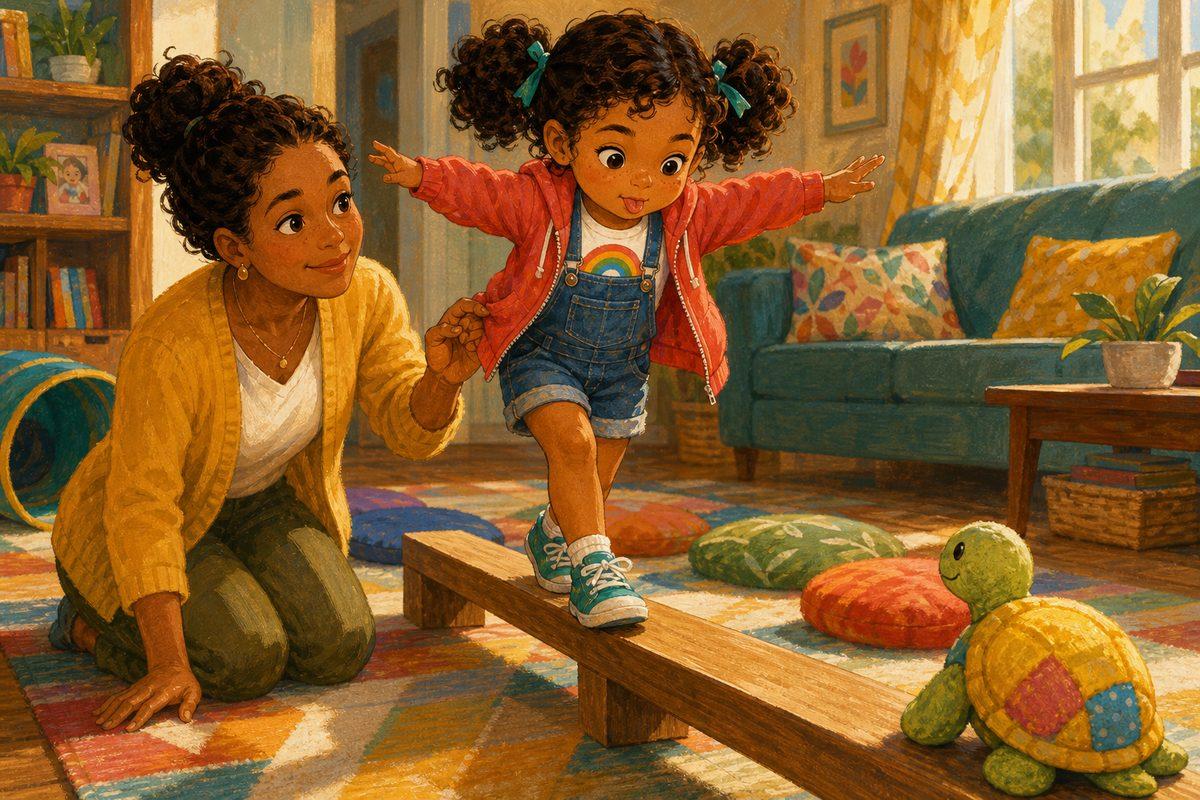

What this story is built to help with: Naming the frustration, trying again after the wobble, and the “…yet” idea — persistence your child can rehearse as the hero who struggles first and wins anyway.
Why a book where your child is the hero grows a try-again kid
Here’s the research finding that should change what’s on your bookshelf: kids don’t copy champions. They copy strugglers who succeed. Studies by Dale Schunk and colleagues found children built more “I can do this” belief watching a model who fumbled first and worked through it than watching someone breeze through — and the strongest models of all were the ones most similar to the child. A flawless hero teaches a kid nothing about her own wobble. A hero who falls off the beam and climbs back on teaches her everything. [13, 14]
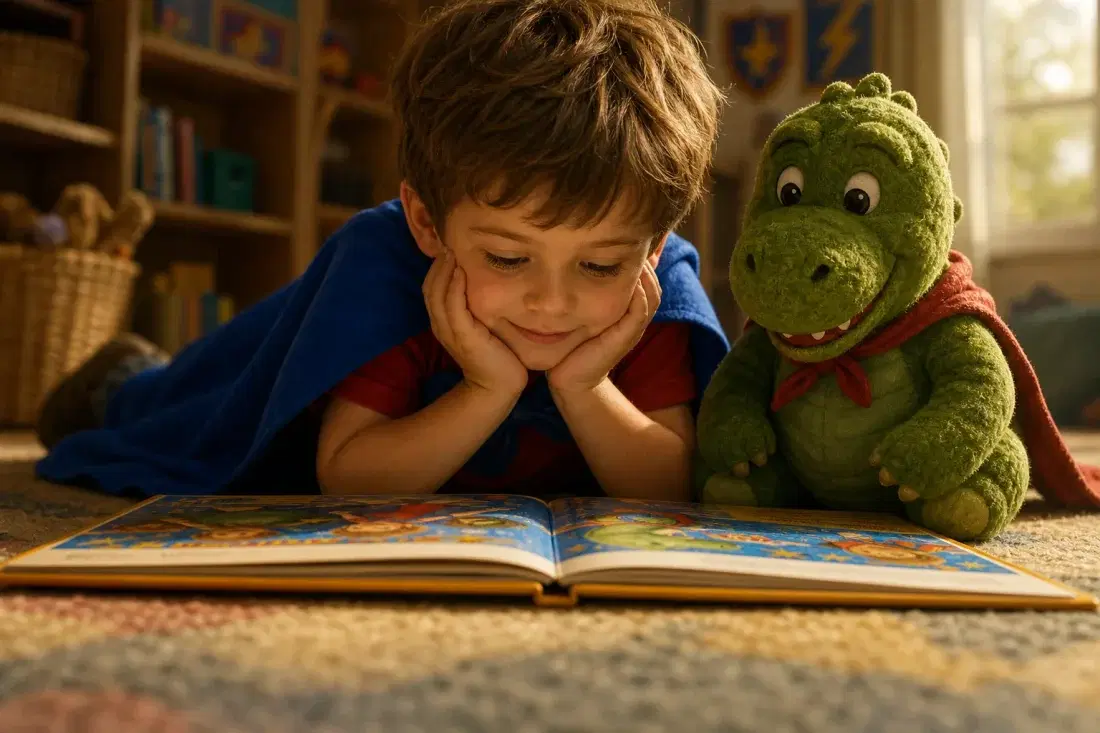
Now make the struggler her. A story where the kid with her name and her face feels the hot frustration, almost quits, tries one more time, and wins — that’s the most similar model that can possibly exist, rehearsed on your lap when nobody’s actually frustrated. The next flung-puzzle moment comes pre-loaded with a script she’s heard twenty times: wobble, breathe, again. And you reading it together is half the magic — the book plus you is what makes it land. [13]
Quick answers
Why does my child give up so easily?
Because the frustration genuinely hurts and the skills for staying inside it are still growing — fastest between ages three and five. For some kids there’s a temperament layer too: a naturally shorter fuse for frustration, which is one end of normal. And from around four, quitting often turns into armor against the sting of failing. None of these are laziness. All of them respond to the same three moves: name the feeling, shrink the task, praise the trying.
Is it normal for a 4-year-old to quit the second something is hard?
Very. This is the age when pride arrives — kids suddenly know what “doing it right” looks like, and falling short stings enough that not-trying feels safer. Meltdowns over hard things are also still developmentally ordinary (the AAP calls tantrums normal, and they fade gradually rather than overnight). What helps is making the struggle smaller, not the standard lower — one reachable win at a time.
My child won’t even try new things. Same problem?
Close cousin. The quitter bails when it gets hard; the cautious kid won’t start in case it gets hard — that’s slow-to-warm-up temperament plus the same fear of failure. The fix rhymes: shrink the first step until trying costs almost nothing (“just put one foot on the beam — that’s it, that’s the whole job”), predict the wobble out loud, and celebrate the try itself. Pushing a cautious kid hard usually deepens the caution; tiny wins melt it.
Should I just let her quit? I don’t want to force it.
Neither force nor fold — hold the middle. Quitting every time teaches “hard means stop”; forcing teaches “hard means Mom takes over and I hate this.” The middle is: validate the feeling, offer a smaller version, and let her finish something — even a tiny something — so the last note is a win. If she’s truly done, close warmly: “We’ll try again tomorrow. Hard things take lots of tries.” The door stays open, and the message stays: this is learnable.
Does praising effort really work, or is that a myth now?
Here’s the honest version. The famous lab studies found “you’re so smart” praise made kids quit faster after setbacks, and a five-year study of real families found parents’ process praise to toddlers predicted kids who later loved challenges. But large replications also show mindset interventions are a small lever overall — most helpful for kids who are struggling. So: process praise is a free, sensible habit that removes a known demotivator. It is not a personality transplant. Pair it with the feeling-naming and task-shrinking above and the pieces stack.
Who’s behind this
I’m Dao — a mom, and the founder of PlotJoys. “Brave to Try” is the story I believe in most: every book we make follows the same rule — the hero wobbles first, then wins — because that’s the hero a real kid can copy. I’ve watched the flung puzzle piece fly across my own living room. The try-again muscle grows. Stories are its gym.
Keep reading
The research, if you want it
- ZERO TO THREE — “Frustration Tolerance” (the ‘easily frustrated’ profile; the puzzle empathy script; the thumb-in-the-mitten script)
- Harvard Center on the Developing Child — Working Paper 11 (self-control skills: ages 3–5 are the rapid-growth window; struggling kids aren’t ‘bad kids’)
- Harvard Center on the Developing Child — Executive Function key concepts (no one is born with these skills)
- HealthyChildren.org (American Academy of Pediatrics) — “Temper Tantrums” (tantrums are a normal part of development, most common ages 1–3)
- Child Mind Institute — “How Can We Help Kids With Self-Regulation?” (scaffold, don’t avoid; pare the task down)
- Child Mind Institute — “How to Help Kids Learn to Fail” (Dr. Amanda Mintzer: validate the disappointment first)
- Child Mind Institute — “How to Raise Confident Kids” (trial and error is how kids learn; pride in effort regardless of outcome)
- Mueller & Dweck (1998), Journal of Personality and Social Psychology (via PubMed) — praise for intelligence undermined persistence after setbacks
- Gunderson et al. (2013), Child Development (via PMC) — process praise to 1–3-year-olds predicted children’s growth-oriented beliefs five years later
- Carol Dweck — “The Power of Yet,” TEDxNorrköping (transcript)
- Sisk et al. (2018), Psychological Science (via PubMed) — two meta-analyses: overall growth-mindset effects are weak; most promise for struggling students
- Yeager et al. (2019), Nature (via PMC) — national experiment: a short mindset program helped modestly, mainly for lower-achieving students
- Schunk & Zimmerman (2007), Reading & Writing Quarterly — coping models (struggle-then-succeed) and similar/peer models build kids’ ‘I can do this’ belief best
- University of Connecticut, National Research Center on the Gifted and Talented — coping models are often more influential than mastery models
- Harvard Center on the Developing Child — Resilience key concepts (coping with manageable challenge is how resilience is built)
- ZERO TO THREE — “24–36 Months: Social-Emotional Development” (‘just enough help’; praise the process script)