Toddler Behavior
Should I Make My Child Say Sorry? (What Actually Teaches a Real Apology)

By Dao, Founder · PhD in mathematics, former Director of Data Science at Uber and Capital One · LinkedIn ↗
The short version
- Prompting is fine. Forcing backfires. Kids in the research saw willing apologies — even prompted ones — as genuine. Coerced ones read as fake, and made the hurt child feel worse.
- The word doesn’t do the repairing. In a study where a tower got knocked over, “sorry” alone didn’t make kids feel better — helping rebuild it did. Teach “sorry + I’ll help fix it.”
- A hollow “sorry” from a 2-year-old is developmentally normal: real apology runs on empathy, and empathy is still under construction. Narrate the other child’s feelings instead — that’s the actual lesson.
- The strongest apology lesson your child will ever get is watching you give one — to them, and to others.
Short answer: prompt, don’t force. In a University of Michigan study, kids saw a prompted-but-willing apology as just as genuine as a spontaneous one. But a coerced apology — squeezed out of an unwilling kid — read as fake to everyone, made the hurt child feel worse, and made the apologizer look less likable. So skip the standoff. Help your child see the other kid’s face first (“look — she’s sad”), wait for calm, and aim for the apology that actually repairs: “sorry” plus helping fix it. In another study, the word alone didn’t make hurt kids feel better — helping rebuild the knocked-over tower did.
First, about the playground moment: the flushed cheeks, the other parent watching, your child clamped shut like a little oyster. Every parent knows that scene. Here’s some relief: your child refusing to say sorry isn’t heartlessness, and it isn’t a discipline failure. Real remorse runs on empathy, and empathy at this age is still half-built. Also — prompting an apology is completely normal parenting; researchers note that about four in ten of kids’ apologies happen because a grown-up prompted them. The goal isn’t zero prompting. It’s skipping the forced, hollow version that teaches the wrong lesson — and there’s a better script for that exact moment.
Part of our guide to social-emotional skills by age.
Your 2-year-old: the words don’t mean anything yet — the faces do
“Say sorry” at this age teaches sounds, not remorse.
ZERO TO THREE is direct about this: we insist toddlers say “I’m sorry,” but many toddlers don’t understand what the words mean. The equipment for real remorse — knowing other people have feelings different from yours — only starts coming online between 18 and 24 months, and it builds slowly for years. A 2-year-old parroting “sowwy” while reaching for the next toy isn’t cold. She’s two. [4]
Try this: Skip the word and point to the face: “Look at Sierra — she’s sad. She’s crying. Let’s see if she’s okay.” Narrating the other child’s feelings is the move that actually builds empathy. If your child wants to pat the crying friend or bring back the toy, that’s the whole lesson — with or without the word.
Your 3- or 4-year-old: prompt gently, and teach “sorry + help fix it”
Old enough to mean it — if you help them get there.
Preschoolers already understand that an apology softens a wrong, and kids as young as four see someone who apologizes as nicer than someone who doesn’t. So apologies genuinely matter — the parental instinct is right. What the research warns against is only the force: kids who watched a coerced apology said it didn’t show real remorse, and the hurt child felt worse. Even 4-to-6-year-olds could tell the difference. [6, 3, 1, 2, 5]
Try this: Wait out the storm first — a child mid-meltdown can’t reach remorse. Help them see the hurt (“look at his face — he’s sad about his tower”), then invite rather than squeeze: “What could we do to help him feel better?” And teach the two-part apology that actually repairs: the word plus the fix. “Sorry — I’ll help you rebuild it.” In the tower study, it was the helping, not the word, that made the hurt child feel better.
Your 5- or 6-year-old: real remorse arrives — help it grow reasons
Now the apology can carry meaning, not just melody.
By five, kids don’t just accept apologies — they weigh them. Research finds 5-year-olds (but not yet 4s) value an apology more when it comes with a reason: “I’m sorry — I didn’t see your tower when I turned around.” The machinery of genuine repair is finally assembled: they can feel the other kid’s hurt, connect it to their action, and want to make it right. Your job shifts from teaching the ritual to protecting its meaning. [6, 7, 8]
Try this: After calm, debrief in three beats: what happened, how did it feel for the other person, what could make it right? Let them choose the repair — the words, the rebuilt tower, a drawing, sharing a snack. Researchers note repairs take many forms; a chosen one beats a recited one. And keep modeling: every honest apology you give — including to them — is the masterclass.
The playground script — what to do instead of “SAY SORRY”
- Tend the hurt child first. Kneel, check on them, be warm. Your child watches this — it’s empathy modeling in real time, and it takes the spotlight (and the power struggle) off the refusal. [4]
- Point at the feeling, not the crime. “Look at her face. She’s sad — her tower fell.” One sentence. You’re lending your child your empathy until theirs grows in. [4]
- Wait for calm. The lead researcher on the forced-apology study says it plainly: make sure the child actually understands why the other person feels bad, and is genuinely ready — a willing sorry later beats a squeezed one now. [2]
- Invite the repair: “What could we do to help?” Rebuild the tower. Fetch the ice pack. Bring back the truck. Making amends is what mends — the word can ride along. [5, 7]
- If the other parent is staring — you apologize. “I’m so sorry — we’re working on gentle hands.” It de-escalates the social moment AND models the exact skill. Two birds, one graceful sentence. [8]
- Never demand the feeling, just the behavior. You can require that the hitting stops. You can’t require remorse on cue — forcing its costume teaches kids that “sorry” is a payment for getting out of trouble, and other kids can tell. [1]
See the “sorry + help fix it” story — starring your child
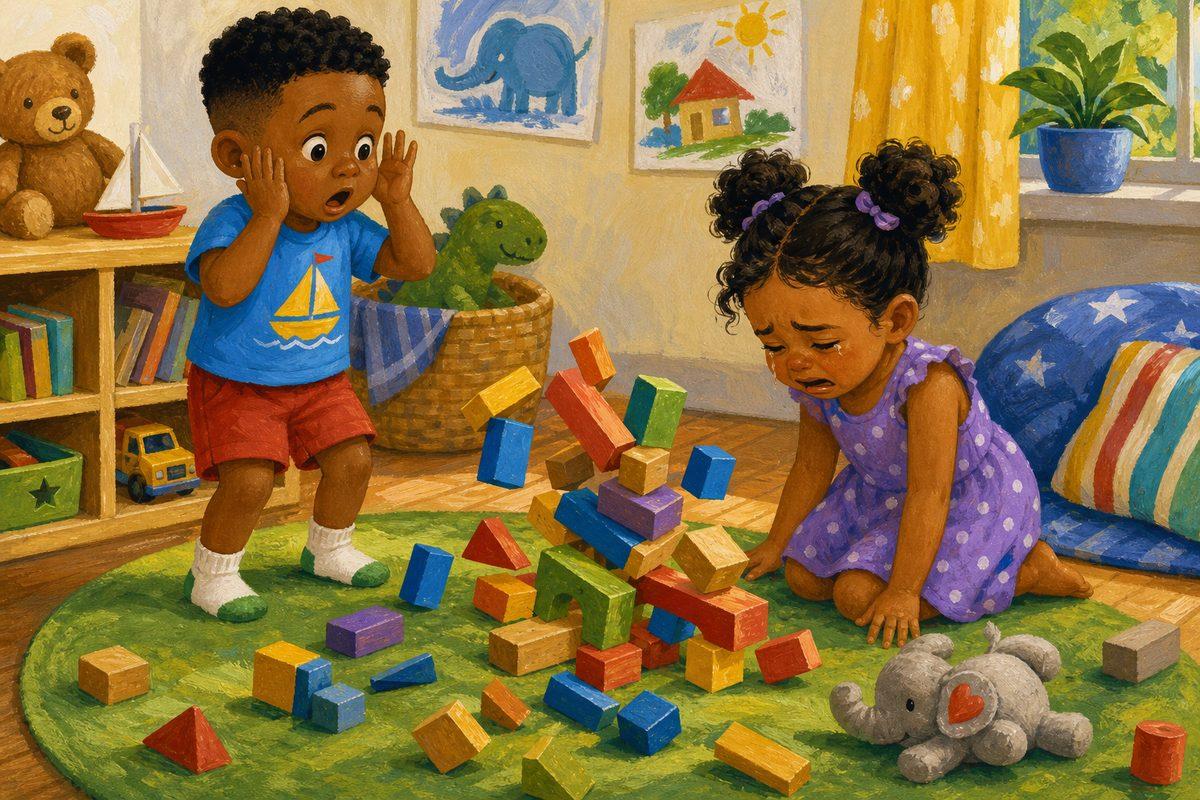
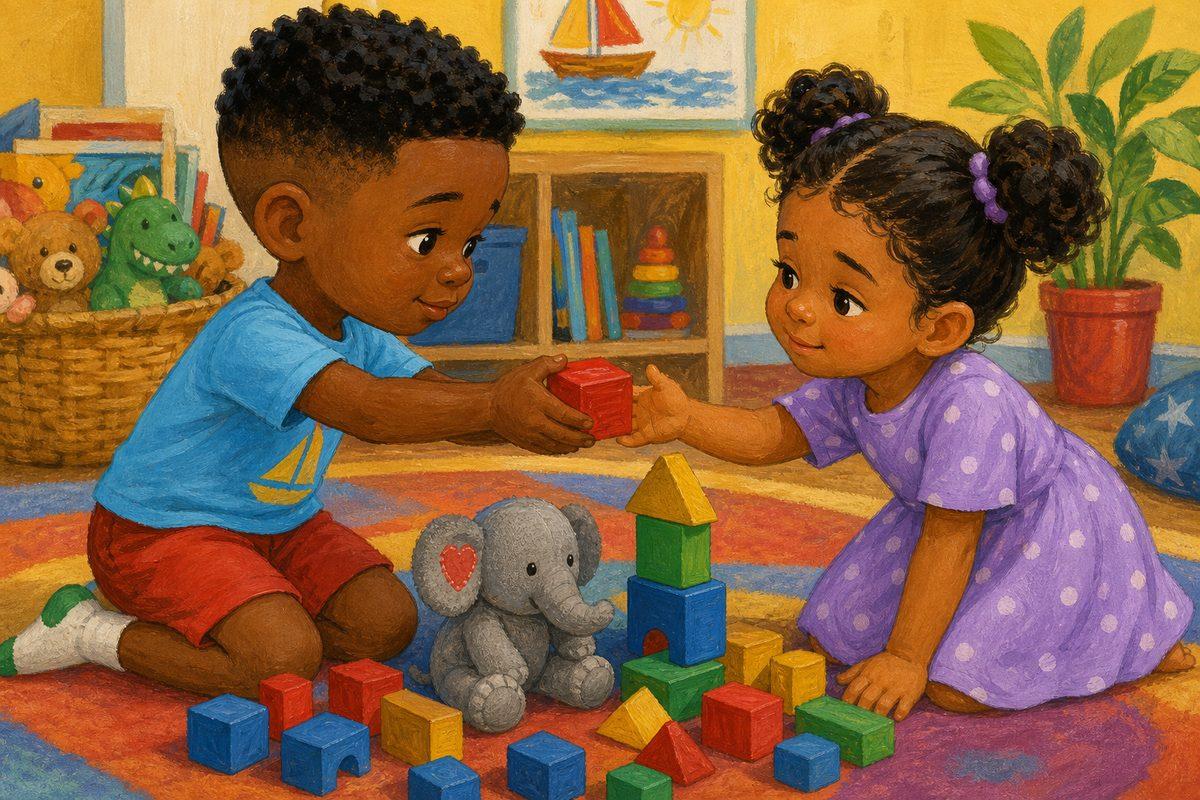
What this story is built to help with: Noticing the other kid’s feelings, the brave sorry, and making amends — repair your child can rehearse as the hero, before the next real playground moment.
Why a book where your child is the hero teaches the real apology
The hard truth about the playground moment: it’s the worst possible classroom. Your child is flooded, embarrassed, and braced — and remorse can’t be squeezed out of a braced kid; that’s exactly what the research found. The learning has to happen earlier, somewhere calm. A story is that somewhere. A hero who knocks over the tower, feels the oh-no, and finds the brave fix lets your child walk the whole repair — feeling, sorry, amends — with zero real stakes. [1]
Make that hero your child and the rehearsal turns personal: they are the kid on the page who makes it right and gets the friendship back. Read twenty times on your lap, the script is pre-loaded before the next real crash — and you reading it together is the other half of the lesson, because kids learn apology by watching the people they love give them. The book plus you is what makes it land. [4]
Quick answers
Should you force a toddler to say sorry?
No — but not because apologies don’t matter. They do: kids as young as four see apologizers as nicer people. The problem is force. In the University of Michigan research, coerced apologies read as fake, made the hurt child feel worse, and made the apologizer look less likable. Prompt gently, help your child get to willing, and let the sorry come with a fix attached.
Why won’t my toddler say sorry?
Usually one of three reasons, all normal: they don’t really understand the words yet (common at 2), they’re flooded with embarrassment and digging in is self-protection (common at any age), or saying it feels like admitting they’re bad. None of these are heartlessness. Wait for calm, point at the other child’s feelings, and offer an action instead of a word — most kids will rebuild a tower before they’ll perform a sentence.
My child says sorry constantly but keeps doing the thing. What gives?
You’ve met the other failure mode: “sorry” as a magic password. If the word instantly ends all consequences, kids learn to spend it like a coin — that’s the hollow-apology lesson from the other direction. Gently raise the price: “Thank you for the sorry. Now what can we do to fix it?” Tie the word to the repair and it regains its meaning.
Should I apologize to my child?
Yes — it’s the single strongest apology lesson you can give. The AAP’s own advice for parents who blow it: cool down, apologize, and say how you’ll handle it next time. A child who receives honest apologies learns that sorry is something strong people say, not a humiliation. (We wrote a whole companion guide for the night you yelled and feel awful — the repair works in both directions.)
Who’s behind this
I’m Dao — a mom, and the founder of PlotJoys. I’ve stood in that playground moment, warm-cheeked, willing my child to just say the word. What finally worked in our house wasn’t a firmer voice. It was smaller: look at the face, wait for calm, fix it together. Our books teach the same move — because a kid who rehearses repair as the hero of a story reaches for it faster in real life.
Keep reading
The research, if you want it
- Smith, Anderson & Straussberger, Merrill-Palmer Quarterly (2018) — “Say You’re Sorry: Children Distinguish Between Willingly Given and Coerced Expressions of Remorse”
- Futurity (University of Michigan release) — Craig Smith on why coerced apologies backfire
- Smith, Noh, Rizzo & Harris (via PMC) — “When and Why Parents Prompt Their Children to Apologize” (apologies matter to kids as young as 4; ~38% of children’s apologies are prompted, per earlier research cited within)
- ZERO TO THREE — “How to Help Your Child Develop Empathy” (toddlers don’t yet understand the words; narrate the other child’s feelings; empathy is a slow build from 18–24 months)
- Drell & Vaish, Social Development (2015), via Medical Xpress (University of Virginia) — “sorry” alone didn’t make hurt children feel better; helping rebuild did
- Journal of Experimental Child Psychology (via PMC) — preschoolers grasp apologies; 5-year-olds (not yet 4s) value a reason with the sorry
- Child Mind Institute — repairs can take many forms beyond the words
- HealthyChildren.org (AAP) — “What’s the Best Way to Discipline My Child?” (the parent’s own cool-down → apologize → plan model)