Starting School
How to Prepare Your Toddler for the First Day of Preschool

By Dao, Founder · PhD in mathematics, former Director of Data Science at Uber and Capital One · LinkedIn ↗
The short version
- Rehearsal beats reassurance. Visits, pretend-school, and books do more than a hundred “you’ll be fine”s — experts call it coping ahead: newness that’s been practiced isn’t new anymore.
- Play the goodbye before you live it. Act out drop-off in the living room — stuffed animals, coat hooks, the special goodbye and the pickup. Feeling in control is what shrinks the fear.
- Meet the teacher and the classroom before day one — a quiet visit beats the crowded first morning by a mile.
- Educators at NAEYC recommend one more tool: a book about your child’s own school story, starring them by name. (We happen to agree.)
To prepare your toddler for the first day of preschool, spend the two weeks before on four moves. Visit: tour the school, play on its playground, meet the teacher before the crowded first day. Pretend: play school at home, stuffed animals and all — act out the goodbye itself. Read: books about starting school, talking about how the characters feel. And rehearse the goodbye: build your ritual now, before it’s needed. Add the boring-but-mighty one — shift bedtime earlier a few weeks out — and keep your own face confident: she reads your weather. Nerves are normal on both sides of the backpack. Rehearsal turns them into butterflies.
First: if your own stomach flips at that circled date, you’re in good company — Nemours reminds parents that everyone feels a little nervous about the first day, grown-ups included. It’s a milestone for two hearts, not one. Also true: some kids bounce in without a backward glance, and some cling — and if yours is the careful kind, that’s temperament, not a problem you caused. Slow-to-warm-up kids aren’t less happy; they just need the new thing introduced on their timeline. Good news: introducing new things gently is exactly what the next two weeks are for.
Part of our guide to social-emotional skills by age.
Two weeks out: visit, pretend, read
Everything scary shrinks when it’s been rehearsed. Start here.
This is the window where the real preparation happens — and none of it looks like a lecture. Every expert list lands on the same three moves. Visit: the school, its playground, the teacher — repeated low-stakes exposure is what clinicians call “coping ahead.” Pretend: play school at home, goodbye included — feeling in control is what shrinks anxiety. Read: starting-school books, talking about how the characters feel — then asking how she feels. [3, 1, 4, 9, 2]
Try this: Also start the boring hero of the list: shift bedtime and wake-up toward school hours, a little each night, starting weeks ahead. Let her pick out the backpack and write her name on it together. Ownership turns “the school’s schedule” into “my school stuff.”
The last few days: build the goodbye before you need it
The drop-off ritual works best if the first day isn’t its first performance.
The goodbye is the hardest sixty seconds of the first day — so don’t debut it cold. The AAP’s advice: practice the goodbye ritual before you ever have to part. Pick your move now — a kiss pressed into her palm to “hold” all day, a special handshake, a two-line song — and run it playfully at home until it’s hers. Decide the pickup line too — “I’ll be back right after outside play” — in kid time, not clock time. And pack the bridge: a lovey or small piece of home in the backpack — experts endorse it for exactly this crossing. [10, 1, 3]
Try this: Do one last walk-by of the school (“there’s YOUR playground”) and lay out clothes together. Keep the night-before talk light: name one fun thing waiting tomorrow — the fish, the slide, the new friend she hasn’t met yet. Worries get heard and problem-solved (“what if I miss you?” → “that’s what the palm-kiss is for”), not dismissed.
The first day of preschool: short goodbye, confident face, done
You’ve rehearsed everything. Now trust the rehearsal.
The morning itself is the shortest chapter: breakfast, the outfit she picked, the backpack with the bunny in the pocket. At the door: walk in, re-introduce her to the teacher, do the ritual exactly as rehearsed, say the pickup line, and go. Warmly, promptly — no sneaking, no coming back for one more hug. Nemours’ line is worth taping to the fridge: the more calm and assured you are, the more confident your child will be. Tears at the door don’t mean the prep failed — most kids settle within minutes, and the teacher’s report at pickup will tell you the real story. [6, 8, 1]
Try this: If she’s slow to warm up, tell the teacher — a good one will fold her in at her own pace, exactly what the AAP prescribes for cautious kids. Then do the hardest part: leave. And when you pick her up, ask the day’s best question: “what was the most fun thing?” First days grow into first weeks on the strength of that answer.
How to prepare for the first day of preschool: the two-week countdown
- Visit the school — more than once. The tour, the playground a few times, the classroom if you can. Familiar ground is the whole game: by the first day, the school shouldn’t be new. [1, 3, 6]
- Meet the teacher early. A quiet hello beats a chaotic one — clinicians note a child who’s met the teacher is “much more comfortable” walking in. [4]
- Play school at home. Take turns as teacher, kid, and parent. Do circle time, snack — and the goodbye, every time. Previewing and role-playing make the real thing less new and scary. [1, 9]
- Read starting-school books together. Ask how the characters feel; then ask how she feels. It’s the gentlest way in to the worries she can’t say head-on. [1, 2]
- Shift bedtime early — weeks early. The least glamorous tip on the list, and the one that decides whether the first morning starts with a rested kid or a wrecked one. [2, 5]
- Build the goodbye ritual now. Pick your move, practice it playfully, and keep it identical from day one. And pack the lovey: a piece of home in the backpack is an expert-approved bridge, not a crutch. [10, 1]
- Mind your weather. If your face says school is safe and exciting, she borrows it. Save your own wobble for the car — plenty of us have christened that steering wheel. [1, 4]
See the “ready for preschool” story — starring your child
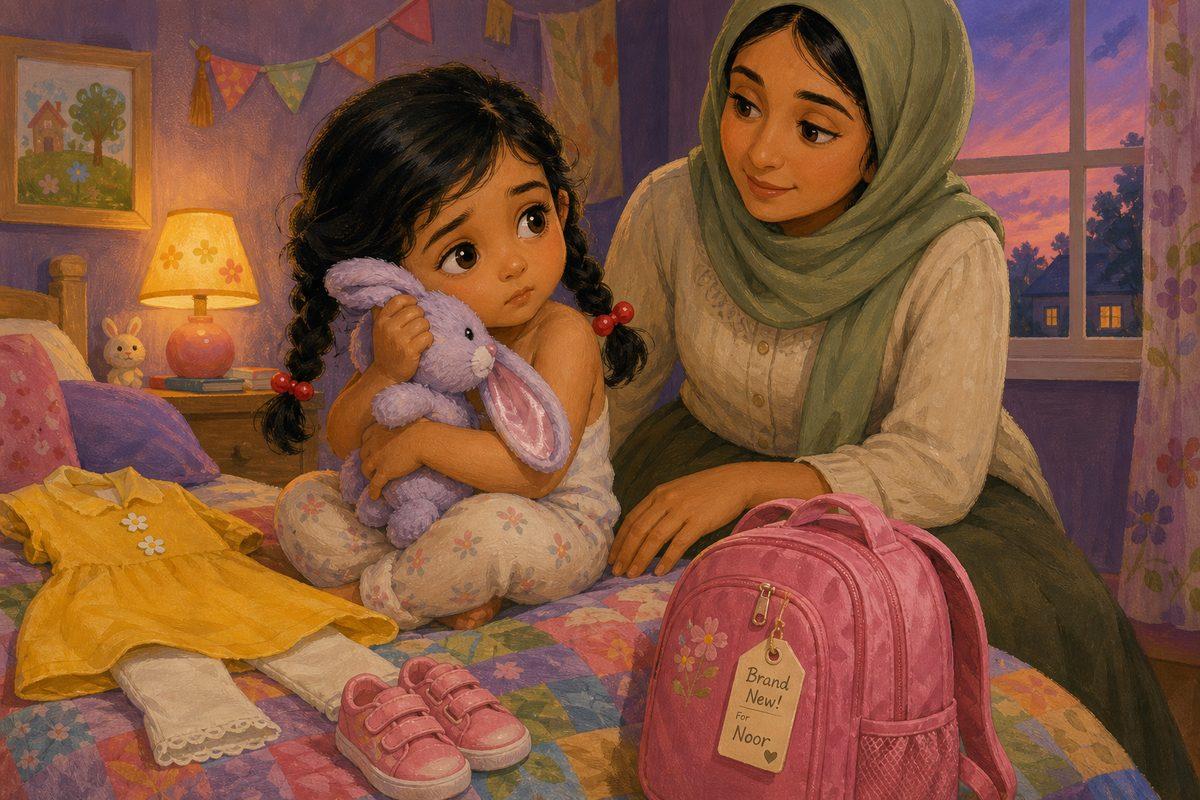
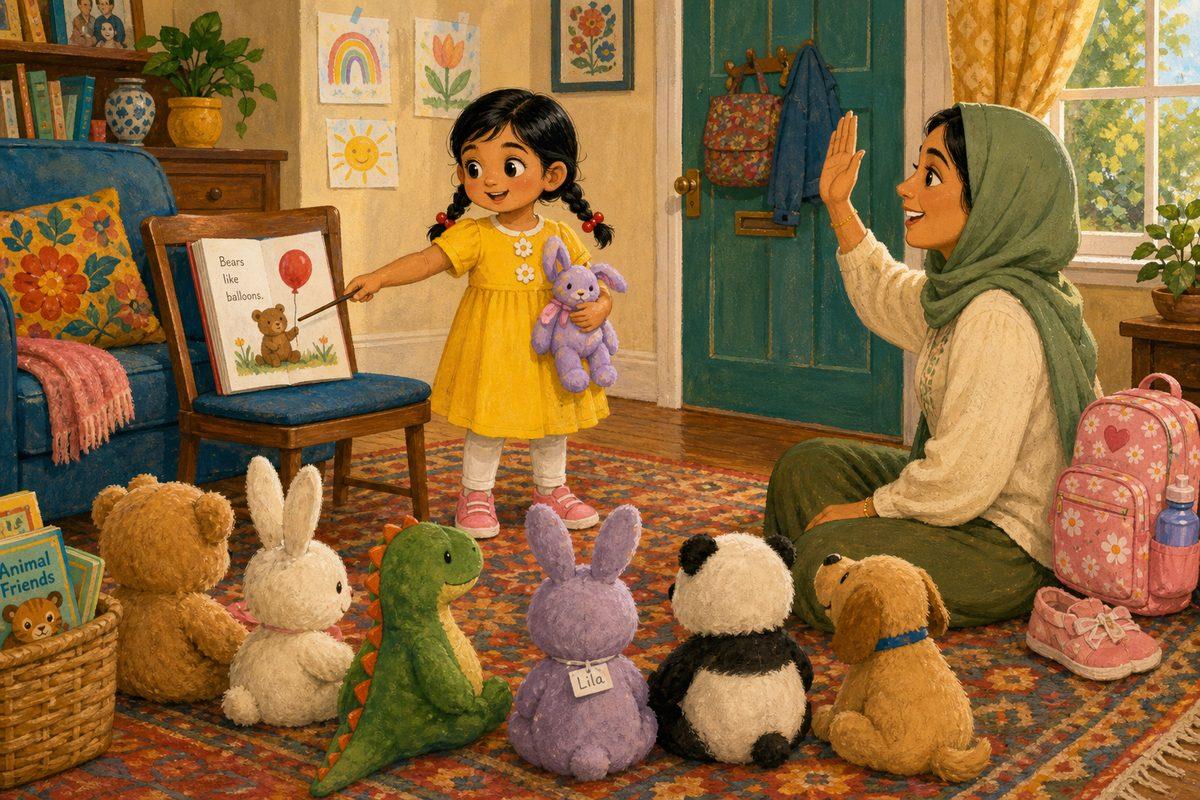

What this story is built to help with: The visit, the pretend-school game, the goodbye ritual, and the lovey in the backpack — the whole countdown, rehearsed as the hero before the real first day.
Why a book where your child is the hero is the best prep tool we know
Don’t take our word for it — take the educators’. NAEYC’s official starting-preschool tips tell parents to make a book about your child’s own upcoming school experience, starring them by name: “This is Sammy at school. This is Mommy picking up Sammy when school is over.” Their reasoning runs through this whole post: a child who has walked through the story of her day — cubby, teacher, goodbye, pickup — isn’t walking into the unknown anymore. The story is the rehearsal. [2]
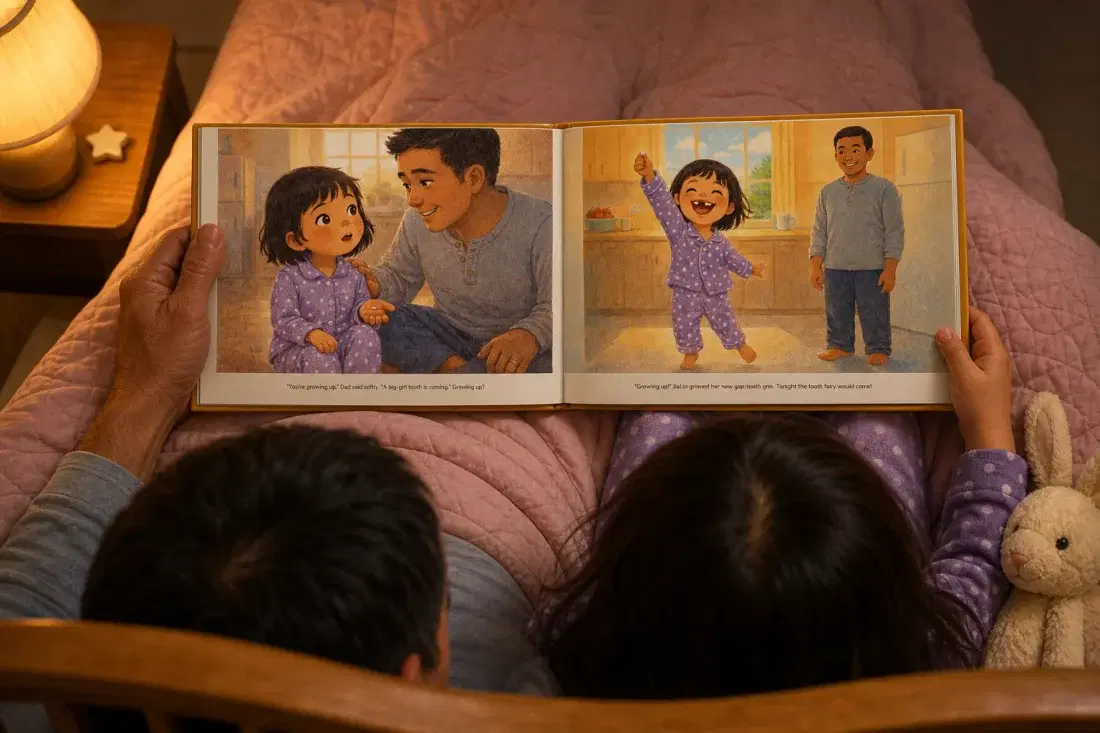
That’s the book we make: your child’s name and face, picture-book quality, the goodbye ritual and the reunion built into the plot. Experts already recommend reading starting-school stories and talking about the characters’ feelings; when the character is your child, the conversation stops being hypothetical. She reads it on your lap in August, packs it in the backpack in September, and the first day arrives pre-rehearsed. The book plus you is what makes it land. [1]
Quick answers
How do I prepare my toddler for the first day of preschool?
Four moves, two weeks: visit the school together (tour, playground, meet the teacher); play pretend-school at home — especially the goodbye; read starting-school books and talk about how the characters feel; and build your goodbye ritual before you need it. Add the early-bedtime shift and let her pick the backpack. Rehearsal, not reassurance, is what shrinks the fear.
What should we do the night before the first day?
Keep it light and predictable: lay out clothes together, pack the backpack (lovey included), name one fun thing waiting tomorrow, and run the goodbye ritual once for fun. Then the early bedtime you’ve been building toward. What to skip: big pep talks and brand-new information — the night before is for calm, not curriculum.
Should I stay for a while at drop-off on the first day?
Shorter is kinder, once the hand-off is done. Do the ritual, say your pickup line, and leave warmly — lingering stretches the hardest part. If the school offers a phase-in schedule (shorter first days, parents nearby), use it: that’s gradual exposure, not coddling.
What if my child is shy or slow to warm up?
Then the countdown matters double — and works. Do more visits, smaller and quieter ones. Tell the teacher so she’s folded in at her own pace. And skip the label — calling her shy in front of others tells her it’s who she is, rather than a warm-up she’s still finishing.
Should I sneak out while she’s playing so she doesn’t cry?
No — tempting as it is, it’s the one move experts uniformly warn against. A parent who vanishes teaches a child to keep watch, which makes every future goodbye harder. Always say the real goodbye — short, warm, ritual and all — and then actually go. Tears at the goodbye usually stop within minutes; broken trust takes a lot longer.
How do I prepare my child for the first day of kindergarten?
The same countdown works for kindergarten — visit the school and playground, meet the teacher before the crowded first morning, play school at home, and build the goodbye ritual early. Kindergartners benefit from two extra rehearsals: the logistics (the bus or carpool line, the lunchbox latches) and a quicker goodbye, since big-school drop-offs move fast. We wrote a whole kindergarten guide — it’s linked below.
What if my toddler has separation anxiety on the first day of preschool?
Expect some tears even after perfect prep — first-day separation anxiety is normal, and the crying usually stops within minutes of you leaving. Do the ritual exactly as rehearsed, hand her to the teacher, and go warmly — no sneaking out, no coming back for one more hug. At pickup, ask the teacher how long she took to settle. That report, not the goodbye scene, is the real signal.
Who’s behind this
I’m Dao — a mom, and the founder of PlotJoys. I’ve done the night-before-preschool vigil: the tiny outfit laid out, the backpack with the tag still on, my own stomach doing the flips I was pretending not to have. The countdown in this post is what I wish someone had handed me — and the book is the part I ended up building myself. That’s the quiet magic of a story made just for them.
Keep reading
The research, if you want it
- ZERO TO THREE — “Preschool Prep: Helping Toddlers Prepare for Preschool” (visits, playing school, books, the kiss-on-the-palm goodbye, the lovey bridge)
- NAEYC — “13 Tips for Starting Preschool” (visiting day, the early-bedtime shift, picking the backpack, making a personalized book about your child’s own school)
- HealthyChildren.org (American Academy of Pediatrics) — “Back-to-School Tips for Families” (visit the school and playground before the first day; rehearse the new situation; problem-solve worries)
- Child Mind Institute — “Back-to-School Anxiety” (Rachel Busman, PsyD: test runs and “coping ahead”; meeting the teacher early; the contagion effect)
- Nemours KidsHealth — “Back to School” (everyone feels a little nervous; the school-night routine weeks early)
- Nemours KidsHealth — “Helping Your Child Adjust to Preschool” (classroom visits ease concerns; a calm, assured parent makes a confident child; never sneak out)
- ZERO TO THREE — “Children with Shy or Slow to Warm Up Temperaments” (temperament isn’t chosen or caused by parenting; cautious kids need time, routines, and previews)
- HealthyChildren.org (AAP) — “How to Understand Your Child’s Temperament” (slow-to-warm-up kids adapt slowly, then accept; multiple brief exposures; let them go at their own pace)
- Child Mind Institute — “Helping Young Children Who Are Socially Anxious” (previewing and role-playing make the real moment less new and scary)
- HealthyChildren.org (AAP) — “How to Ease Your Child’s Separation Anxiety” (practice the goodbye ritual before you ever have to part; keep it short and consistent)