Our Story
AI Storybooks: I Won’t Read Slop to My Kiddo

By Dao, Founder · PhD in mathematics, former Director of Data Science at Uber and Capital One · LinkedIn ↗
The short version
- Slop is what anyone makes when there’s no taste in the loop — no care, no effort, no heart. AI just made it fast.
- Slop is older than AI. I’ve borrowed human-made slop from the library.
- If you made your kid a wobbly AI book yourself, that’s not slop. Crude counts. The bar is for people who charge money.
- The fear is fair — and the critics are the standards. The answer isn’t a comeback; it’s better work.
- Embrace the wave, hold it to a bar. I’ve applied for a grant to build that bar into a real benchmark.
Everyone’s tried making an AI storybook. A lot of what’s out there deserves the word slop — but slop is older than AI; I’ve borrowed it from the library. This is about what’s actually missing (craft, soul, taste), why the fear behind the word is fair, and the bar I hold my own books to: I won’t read slop to my kiddo.
Everyone has tried this
Almost every tech-ish parent I talk to has already made their kid a “book” with a chatbot. A few minutes, a few prompts, and out comes a story with pictures.
I love that people try. I started exactly the same way — with a book that had no pictures at all, just my daughter’s name. I wrote that whole story up in my first Founder Note; it’s linked below.
And a lot of the storybook apps out there are the same few minutes in a nicer costume — a thin wrapper around a single Gemini or GPT call. Same machine, same first draft.
You can tell in five seconds
But a lot of what’s out there — especially what’s sold as finished — you can just tell. The images look weird in a way you can’t quite name. The text rambles past what a three-year-old can follow. Nothing is exactly wrong, and nothing is right either.
And what’s missing isn’t resolution or grammar. You don’t feel any craft in it. No soul. No taste. Nobody made choices, and nothing got thrown away. It reads like the first thing that came out of the machine — because it is.
I’m not the only one seeing it. Wired just ran a whole piece on AI “slop books” — grandparents gifting them, parents wincing. One dad said his kids sat through theirs exactly once, bored by how long and wordy it ran, then asked for *Little Blue Truck* instead. Kids can tell. Honestly? That’s the good news. [1]
Who this isn’t about
Before I go further: if you’ve made your kid a wobbly little AI book yourself — that is not what I mean by slop. Crude counts. Crude *especially* counts. My first book for my daughter was crude, and she hugged the iPad anyway. When you make something for your own child, the love is the craft.
Same if you whipped one up in a few minutes just for fun, and you’ll read it tonight because it makes you both giggle. That’s a proud little DIY project, wobbles and all. Speed isn’t the sin.
The slop worth the word is carelessness at scale — generated by the thousand and sold to strangers’ kids. And even there, I’m not going to guess at anyone’s heart. Some sellers care and are still learning. Some are just fast. It doesn’t matter to the bar: the bar grades the book, not the heart.
Make anything you want for your own kid. The moment you charge someone for *their* kid’s book, care stops being optional.
Slop is older than AI
Here’s my confession from the library.
Back when I was borrowing every book I could find for my daughter, some of the human-made ones left me wondering: how did this get published? There was no care in those either. Written, illustrated, edited, printed, shelved — and somewhere along that whole line, nobody’s taste was in the loop.
So I don’t think slop is what AI makes. Slop is what *anyone* makes when there’s no taste in the loop — no care, no effort, no heart. AI just made it fast.
And the fear is fair
I understand why “AI slop” became a reflex — why people type it under things they haven’t opened. There’s real fear underneath, a lot of it from people who’ve spent their lives on craft. Something is moving under their feet.
It moved under the carriage drivers’ feet too, when cars showed up. And here’s the thing: those critics weren’t wrong. Early cars were loud, dangerous, and worse than a horse in the mud. For a while the law made a man walk in front of every motorcar waving a red flag. The complaints weren’t ignorance — they were the quality bar arriving. Cars answered by getting better. [3]
So I don’t argue with the slop-callers. I think they’re doing the useful work: they’re the standards. The answer to them isn’t a comeback. It’s better work.
What the good stuff feels like
Because the ceiling is real. Some AI-made work now is genuinely good — I’ve watched AI-made video that I simply enjoyed, without once thinking about how it was made. You can’t tell. That’s a kind of Turing test, and passing it isn’t magic. You can feel the hundreds of human decisions behind it. Somebody’s taste, all the way through.
That’s the whole difference. Not the tool. The taste, and the care behind it.
What slow looks like for a storybook
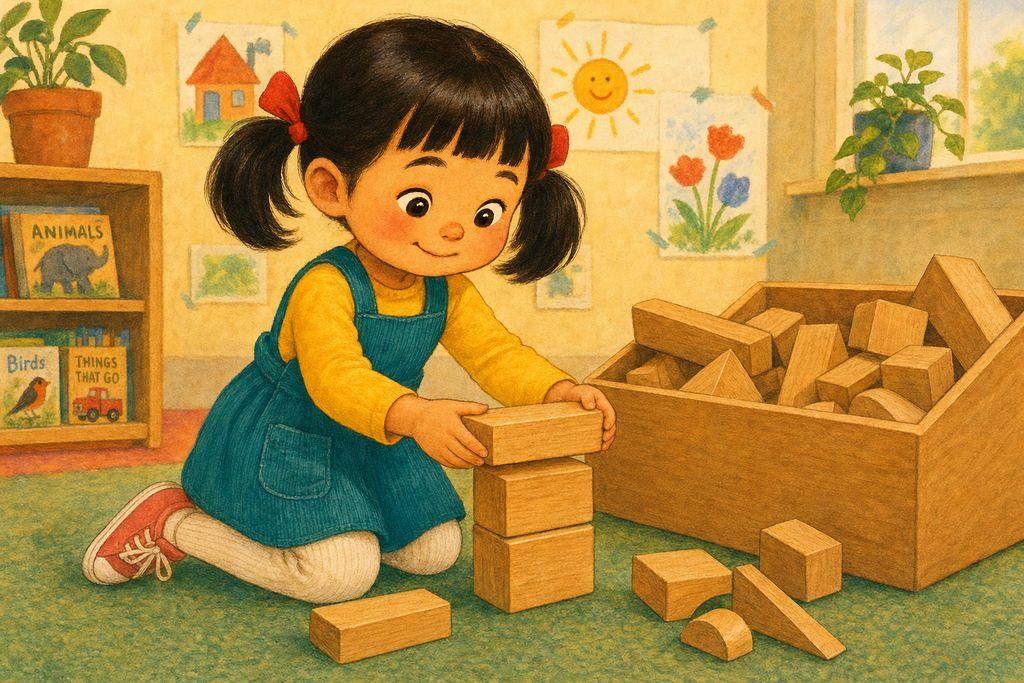
For my books, it means: months of research into how children’s books actually work, compiled into the system. Words leveled to the age of the child listening — the researcher in that Wired piece says age appropriateness is one of the most important criteria in a children’s book, and she’s right. A character who stays herself on every page. Art that holds up printed large. Photos deleted after the book is made. And if anything isn’t right, I edit until you love it. Unlimited edits, or your money back. [1, 2]
That researcher said something else I’d frame and hang on the wall: “Children do not love a storybook simply because their name or image appears in the story; they love the book because the story itself is interesting.” Exactly. The name and the face get a child to lean in — the research and my own living room agree on that. Only the story keeps her there. You need both. The story is the hard part. [1, 2, 4]
The slop services say “ready in minutes.” Honest numbers from my side: a first draft takes about thirty minutes — and that’s the fast part. When a family wants changes, I edit until they love it. Sometimes that’s a couple of hours. Sometimes it’s days. Slow is fast, when the alternative is a book nobody asks for twice.
And the part I care about most isn’t the reviewing itself — it’s what each review does. Every fix goes back into the system: today’s correction becomes tomorrow’s rule, and the same mistake doesn’t come back. Human in the loop, so the loop learns. That’s why my thirty-minute first drafts are good now, when they didn’t use to be.
I’ve started writing up how we do each piece, one note at a time — the first one is linked below, and you can read the whole real book it’s about, free, every spread. Bring your slop-radar. That’s what it’s for.
The bar
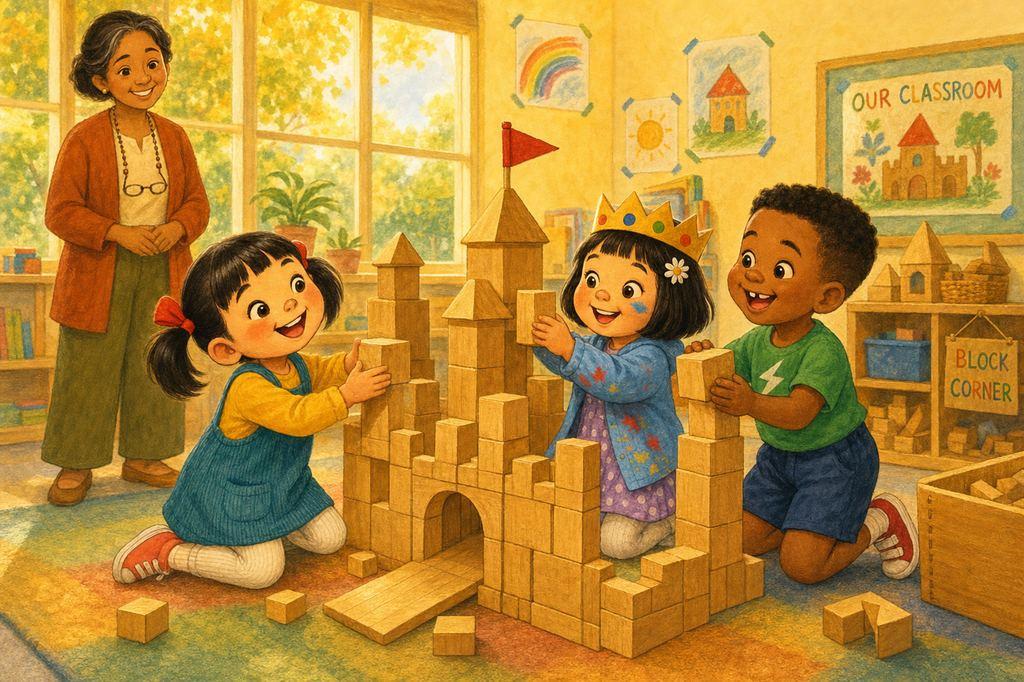
The wave is real, and here’s what it actually carries. Before this technology, a book truly about your child meant one of two things: a template with the name swapped in, or hiring a team — an author, an illustrator — for more money than most families would ever spend on a book. The real thing belonged to the very rich.
Now a regular family can have it. That’s worth embracing. Not worshipping — embracing, and holding to a bar. Slop isn’t an argument against AI. It’s the to-do list.
I mean the bar literally, by the way. I already hold my own books to a standard, and I’ve applied for a grant to build it into something better: a proper benchmark that can grade a children’s book on outcomes — no matter who, or what, made it. Starting with the AI-made ones.
Because the bar shouldn’t ask who held the pen. It should ask whether the book deserves the child.
Mine is simple, and it’s where all of this started: I won’t read slop to my kiddo.
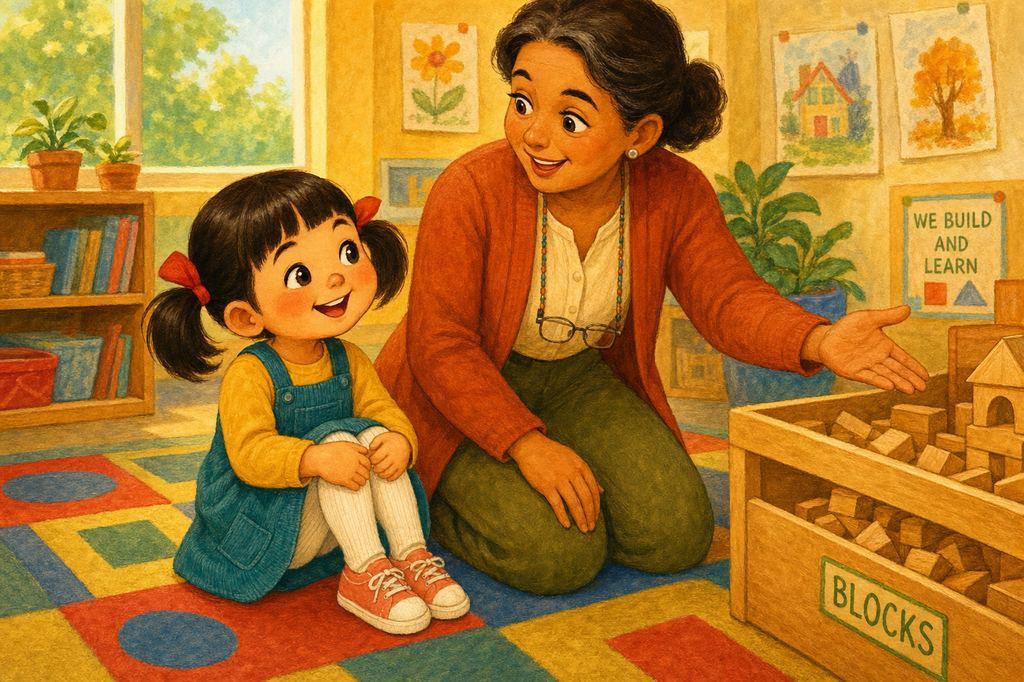
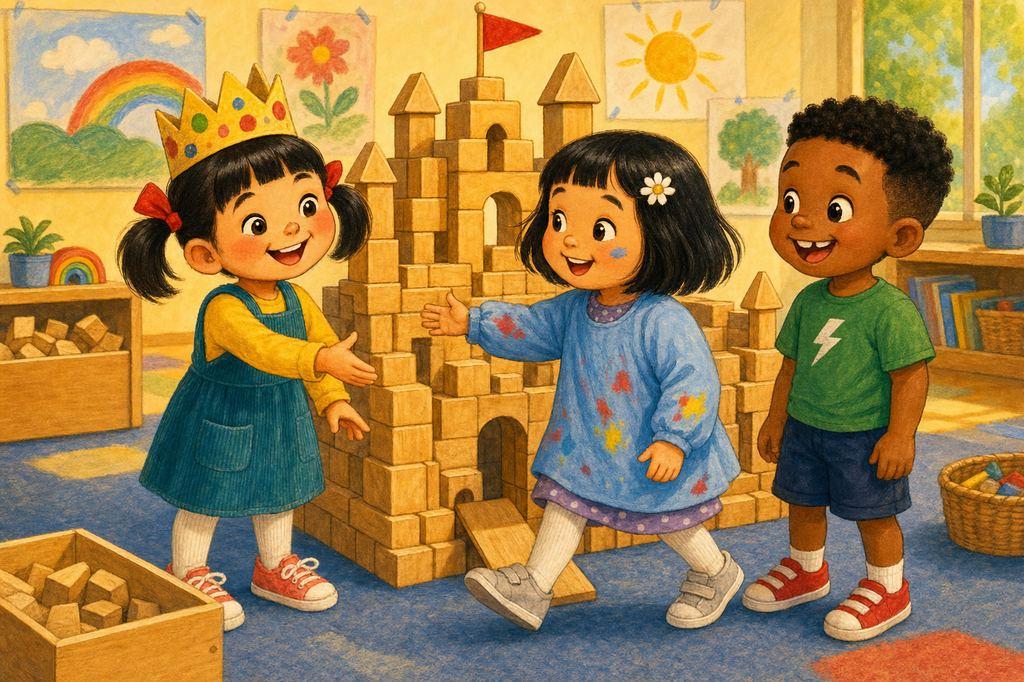
Test the bar on my own work: “JiaLin Builds a Good Day”
Quick answers
Isn’t this essay just an ad for your books?
Partly, honestly — it’s the argument behind them. But the bar cuts both ways: everything I said here, you can test on my own work. The whole JiaLin book is linked below, free, every spread. Bring your slop-radar.
Are AI-made books better than human-made ones?
Wrong question, I think. The bar shouldn’t ask who held the pen — it should ask whether the book deserves the child. Some human books clear it, some don’t. Same for AI.
What’s the standard you’re building?
I already hold my own books to one. I’ve applied for a grant to turn it into a proper benchmark that can grade any children’s book on outcomes, starting with the AI-made ones. If you work on children’s books or child development and want to help hold the ruler, write to me from the contact page.
Who’s behind this
I’m Dao — a mom, an AI/ML person, and the founder of PlotJoys. This is a Founder Note, from the series where I show what it actually takes to make an AI storybook worth keeping. If you’ve made one for your kid — or you just want to argue about the bar — write to me from the contact page. I answer.
Keep reading
The research, if you want it
- Miles Klee — “Boomers Can’t Stop Gifting Their Grandkids AI-Generated Slop Books,” WIRED (July 29, 2026)
- Dr Daozhi Xu (Macquarie University) — “Bedtime stories by ChatGPT? The AI children’s book boom explained,” The Lighthouse (May 2026)
- National Motor Museum, Beaulieu — the Locomotive Act 1865 (“Red Flag Act”) and the 1896 Emancipation Run
- Kucirkova, Messer & Whitelock (2013) — personalized books and parent-child engagement, Journal of Early Childhood Literacy