Our Story
The Research Inside My Daughter’s Storybook

By Dao, Founder · PhD in mathematics, former Director of Data Science at Uber and Capital One · LinkedIn ↗
The short version
- It started with a real evening — “I don’t want to play with you,” from her best friend. The book is the evening I wish I could have handed her.
- Every scene is a skill — name the hurt, cope with a “no,” build anyway, join the play. Lived, not lectured.
- We read the good shelf books. Really good. Still not her situation.
- The whole book is free to read — every spread, ending included.
- The book plus you is the magic.
My daughter’s best friend told her “I don’t want to play with you.” I looked for a book about exactly that, and it didn’t exist — so eventually I built it. This is the real story, the research inside “JiaLin Builds a Good Day,” and the whole book, free to read. And if you tinker with AI, there’s a part in here for you too.
The evening this started
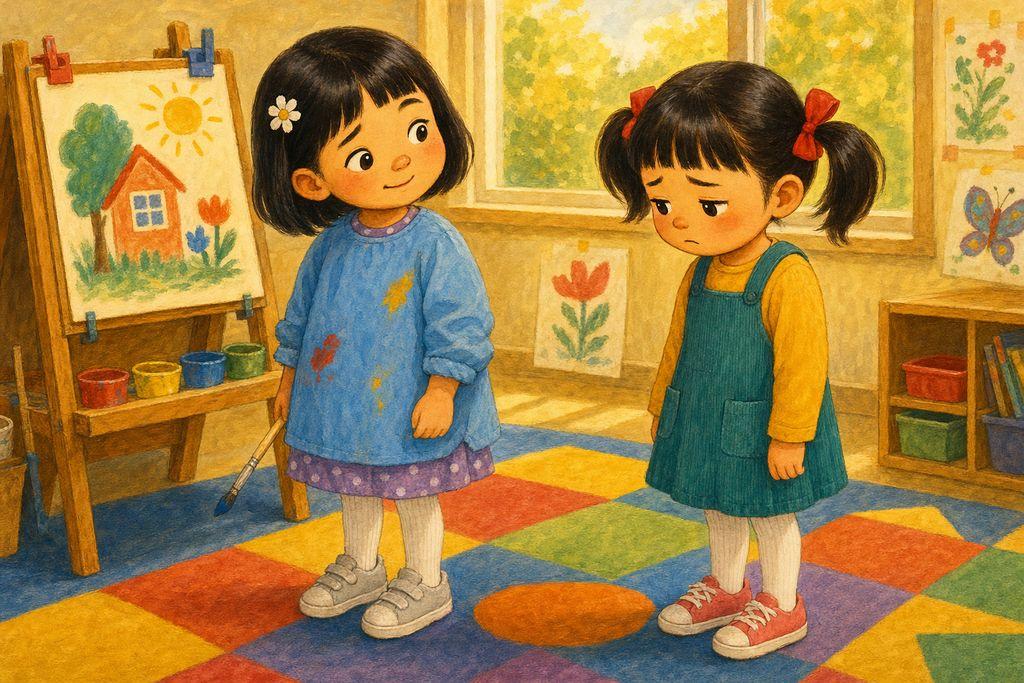
It was an ordinary evening after school, and she wasn’t happy. When I asked, she told me: Nichole didn’t want to play with her. And Nichole was her best friend.
I tried to coach her through it — but everything I said was too adult. I don’t think much of it landed. She was three.
So I thought: maybe a storybook could say it better than I could.
So I went looking for the right book
I asked ChatGPT for recommendations, borrowed every one of them from the library, and read them to her. They helped, a little. But none of them were her. And some had so many words she couldn’t follow them — beautiful books, just not written for a child her age.
Two of them we still love. *The Rabbit Listened* is the right age, and it’s lovely — but the hurt in it is a knocked-over block tower, not a best friend saying no. *The Invisible Boy* is the famous one about being left out — and it’s written for six-to-nine-year-olds. She was three. [11, 12]
So that’s how everything started. I made her a book myself. It didn’t have her face yet — just her name — and she loved it. We read it again and again, and we shared it with family.
Then one day I managed to get her look into a book. It wasn’t nearly as good as what I can make today. I didn’t even print it — I just handed her the iPad.
She was so happy she hugged it. That picture has stayed in my mind ever since.
That’s why PlotJoys exists.
Every scene is a skill
“JiaLin Builds a Good Day” came much later. It’s my studio’s version of that evening — the version I wish I could have handed her that night.
We did a lot of research into how experts help little kids through a social bump, and we built the story so every scene is one of those skills. Lived, not lectured.
Skill 1 — name the hurt before you fix it
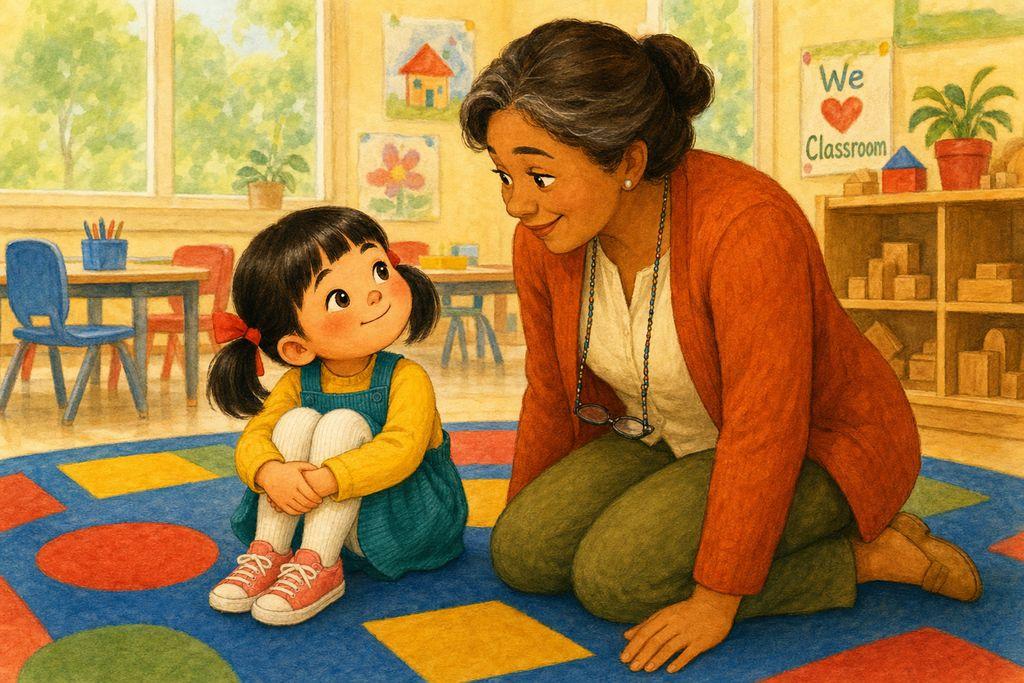
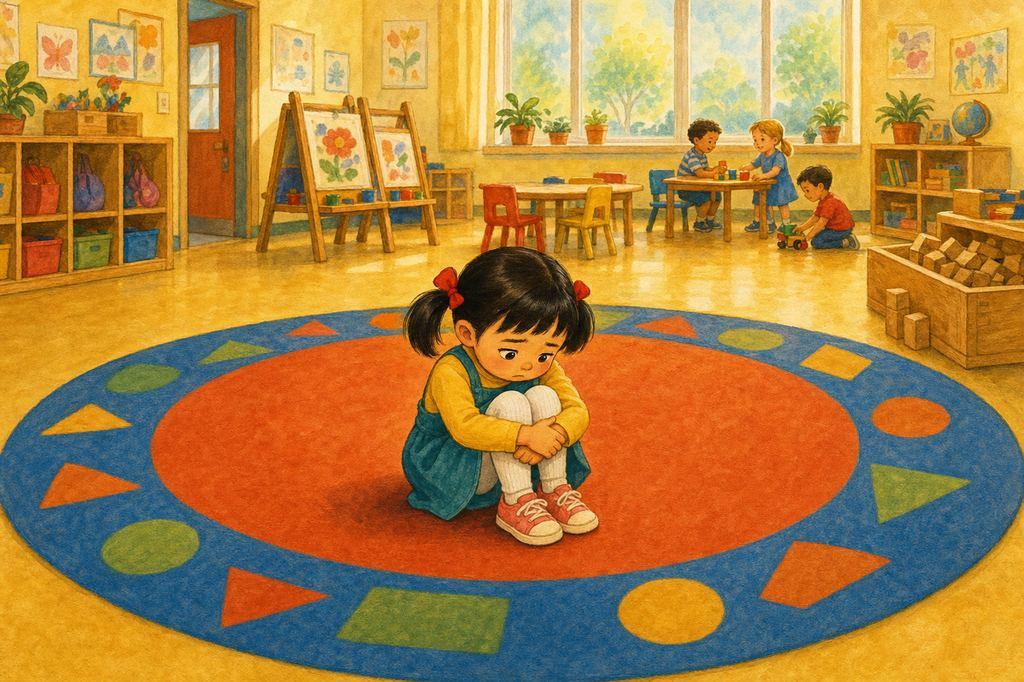
The story starts in her body: “JiaLin’s tummy felt funny.” Little kids often show a feeling before they can say it — the tummy knows first. [4, 5]
Then the teacher kneels down and gives her the words: “That feels sad, doesn’t it? Left out, too.” Naming a feeling helps calm it, and naming comes before fixing — if you rush to fix, you solve the wrong problem. [1, 2, 3]
Skill 2 — coping with a “no”
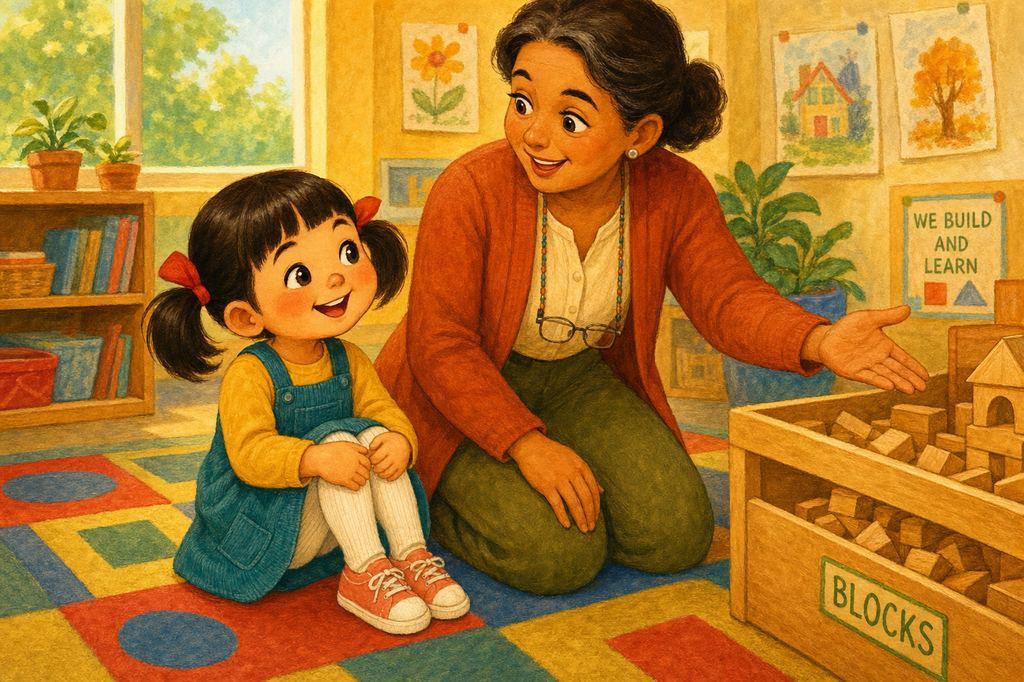
At three, “best friend” mostly means favorite-right-now. A “no” today usually isn’t rejection, and it passes. [8]
So the grown-up in the book doesn’t argue with the feeling: “It’s okay to feel sad. And it’s still your day.”
Skill 3 — build anyway
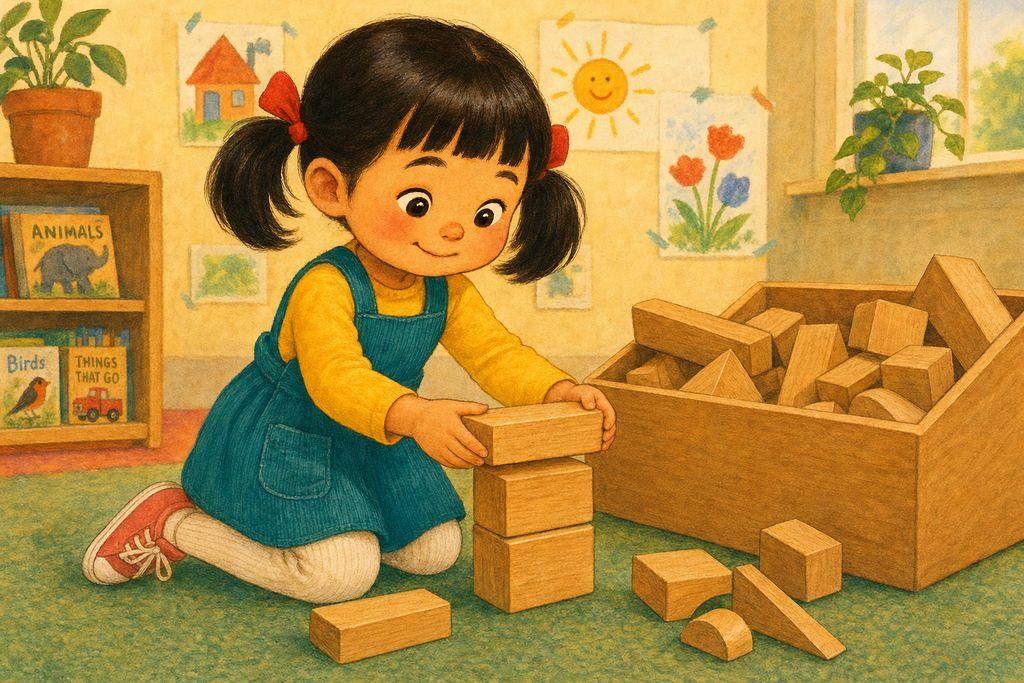
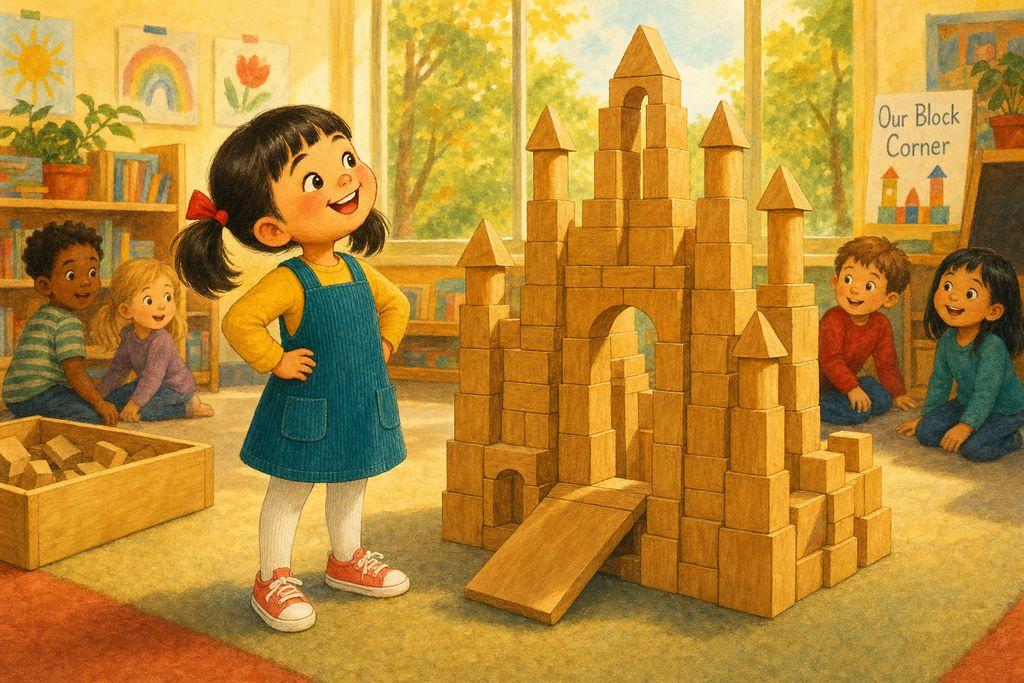
“What do you love most?” She doesn’t rebuild the day for JiaLin — she asks the question that lets JiaLin rebuild it, one block at a time. [3]
The dedication page says it plain: you can always build a good day, one block at a time.
Skill 4 — the brave move: joining play
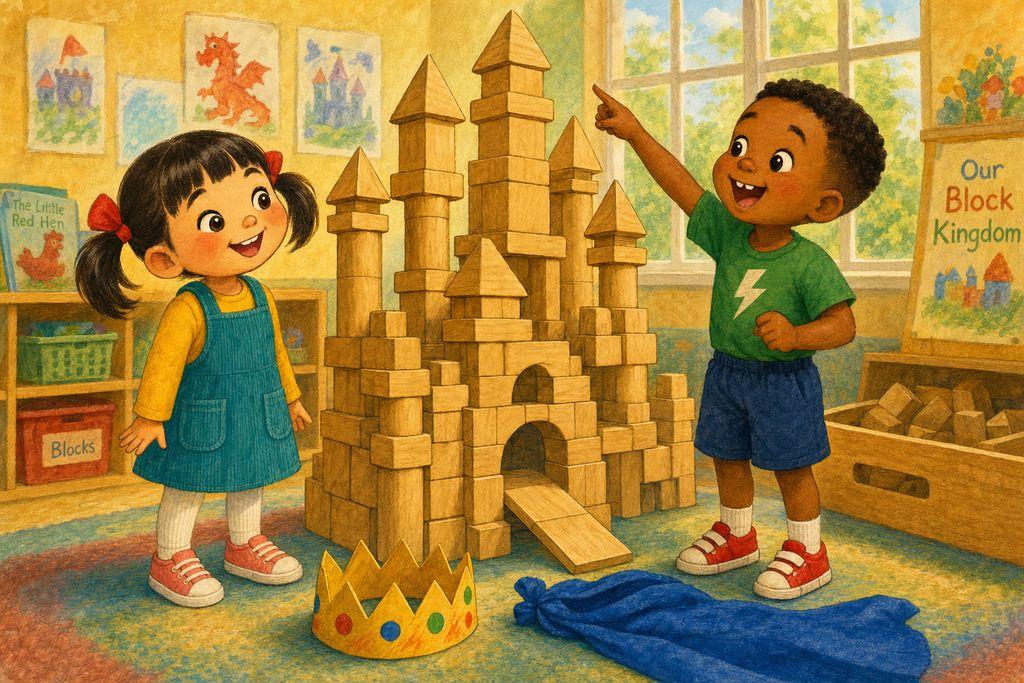
Joining a game that’s already going is a real skill, and it’s hard even for well-liked kids. What works is watching first, then adding to the play. [6, 7]
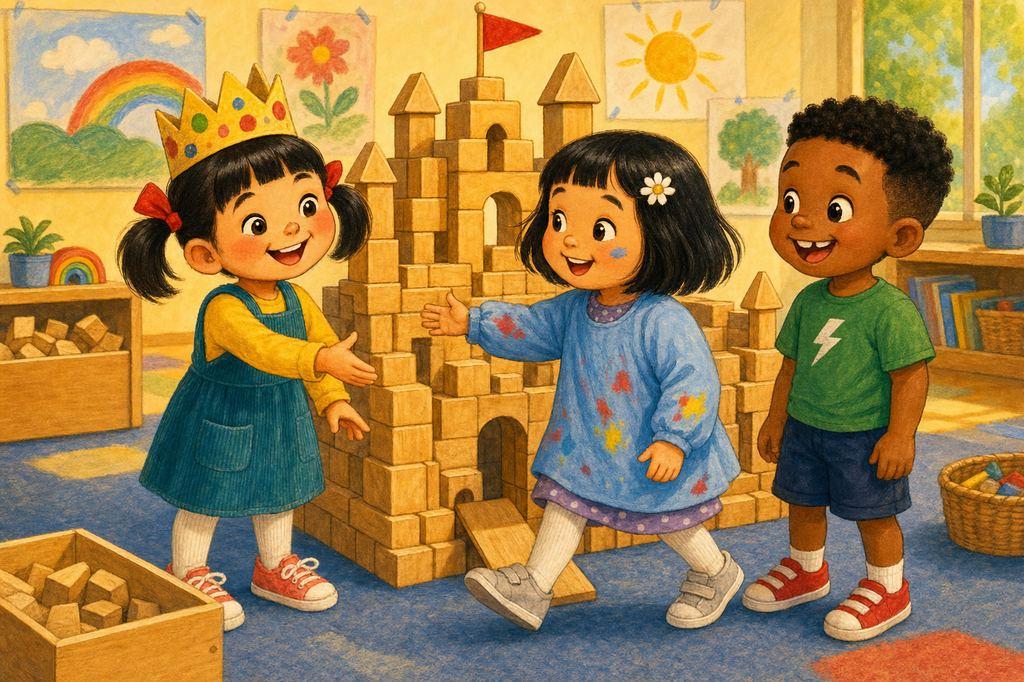
The book does it twice. Theo joins JiaLin by adding to her castle, and when Nichole comes back — “Can I play now?” — JiaLin’s yes has no grudge in it: “Come help us guard the castle!” A friend can differ and still be a friend.
A note for the grown-up watching
One thing the book never does is make Nichole the villain. Nobody calls her mean, and nobody referees. [10]
Watching a friendship wobble without stepping in is hard, but that’s how the skill grows — theirs, not ours.
The part where I show off a little
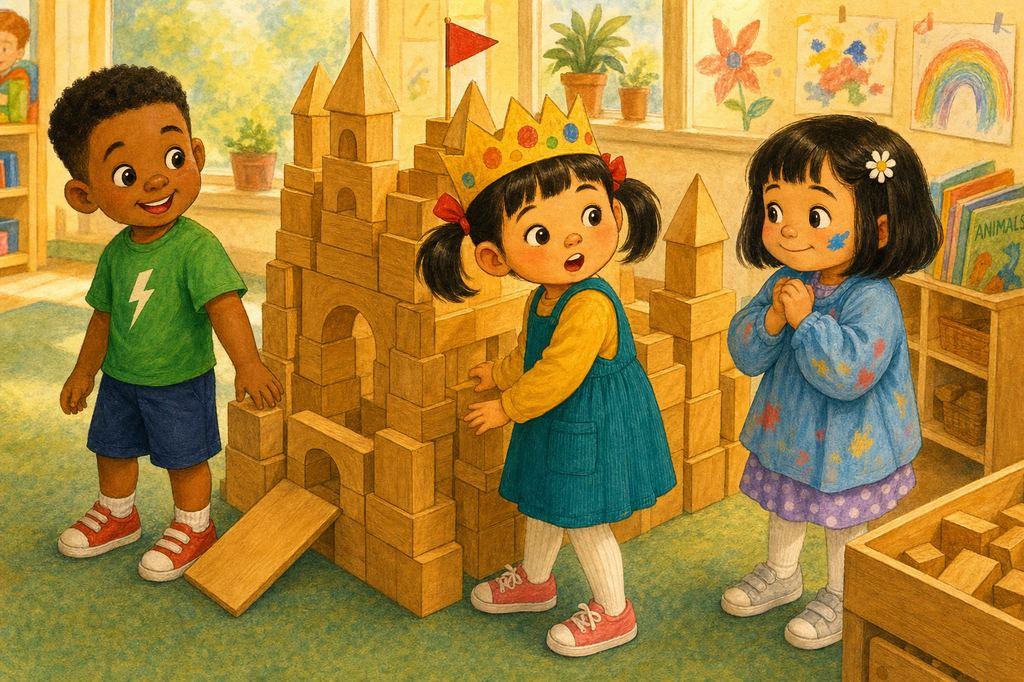
If you’ve ever tried making a storybook with a chatbot, this part is for you. Everyone else can skip it.
Look at Nichole in this spread — blue paint on her smock, a smudge on her cheek. She left to go paint *six spreads earlier*, and the book remembered.
That’s one small thing you can see. Most of the hard parts you can’t. The story has to actually work — a real arc across fifteen spreads, in words a three-year-old can hold, with the skills woven in so they never sound like a lesson. The pictures have to stay right — the same child on every page, hands that look like hands, a world that obeys its own rules, nothing that turns strange or scary. And all of it has to hold together at once.
One prompt can’t hold all of those jobs. That’s why I built a studio instead — different parts doing different jobs and checking each other, the way a film crew does it. Every character has an appearance contract that each image inherits, and the world’s state travels from spread to spread — who wore what, who chose what, what got built.
That’s why the cubbies on page one already say JiaLin, Nichole, and Theo, and why the castle grows block by block instead of changing shape.
Starting an AI storybook is easy. Getting it right — the writing, the pictures, the level, all at once — is the hard part. That’s what the studio is for.
And on your side, it stays the way it should be: one story idea, a couple of sentences. The complicated part is my job.
What comes out the other end is a full story — fun to read, the research folded in, words a three-year-old can absorb, and beautifully illustrated. Not perfect — I’m not claiming perfect. But really good.
Without the studio, there are two ways to get a book like this: spend a week of evenings wrestling a chatbot, or hire a children’s writer, an illustrator, and a child psychologist. This is the version a regular family can actually have.
Why it had to be her
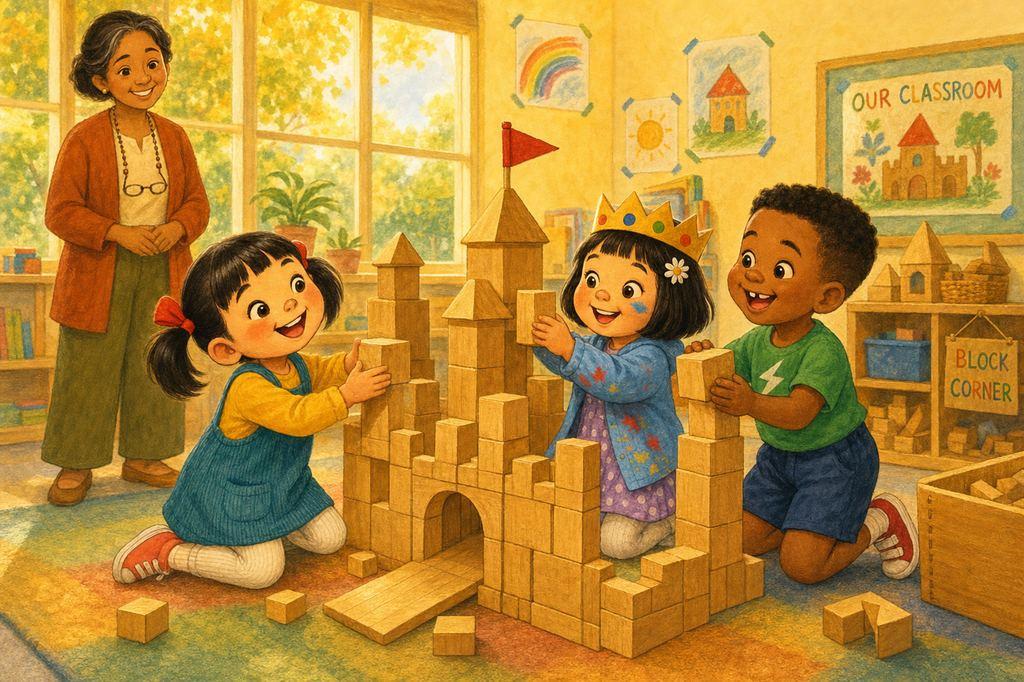
In a study of toddlers, families smiled more, laughed more, and talked more with personalized books than with ordinary ones. It’s a small study — a happy hint, not a promise. [9]
But I didn’t need a study — I watched it. “That kid was brave” is a nice thought. “I am brave” is different, when the kid on the page has your face.
And you’re the one reading it to her. The book plus you is the magic.
The book itself: “JiaLin Builds a Good Day”
Quick answers
Did this really happen?
Yes — the evening was real. Her best friend told her “I don’t want to play with you,” and my trying to help went right past her. The book came later: the version of that evening I wish I’d had, built from the research. Making it is how PlotJoys started.
Can a book really teach this?
A story your child stars in is teaching that never feels like teaching. And you make it land — the book plus you is the magic.
Can I get one for my kid’s exact situation?
Yes — that’s the whole point. The almost-your-kid book is already on the shelf. The exactly-your-kid book is the one we make. A preview takes a couple of minutes.
Who’s behind this
I’m Dao — a mom, an AI/ML person, and the founder of PlotJoys. This is the first of my Founder Notes: what it actually takes to make an AI storybook worth keeping. If you’ve made one for your kid — even a rough one, especially a rough one — I’d love to see it. Write to me from the contact page. I answer.
Keep reading
The research, if you want it
- Siegel, D. J. & Bryson, T. P. — “The Whole-Brain Child” (2011): the “name it to tame it” strategy
- Lieberman et al. (2007) — “Putting Feelings Into Words,” Psychological Science (UCLA summary): labeling feelings calms the brain’s alarm response
- Child Mind Institute — “How to Help Children Calm Down”: naming and accepting feelings is the foundation for problem-solving
- Child Mind Institute — “Anxious Stomachaches and Headaches”: kids without words for feelings often show them physically
- Zero to Three — “First Feelings”: babies experience big emotions well before they can put them into words
- Eileen Kennedy-Moore, PhD — “5 Friendship Skills Your Child May Have Forgotten” (Psychology Today, 2021): the watch-then-join-by-adding strategy
- Putallaz, M. & Gottman, J. M. (1981) — “An interactional model of children’s entry into peer groups,” Child Development 52(3)
- Eileen Kennedy-Moore, PhD — “Children’s Growing Friendships” (Psychology Today, 2012), summarizing Selman’s friendship stages
- Kucirkova, Messer & Whitelock (2013) — personalized books and parent-child engagement, Journal of Early Childhood Literacy
- Raising Children Network (Australia) — “Preschoolers making friends”
- Cori Doerrfeld — “The Rabbit Listened” (Dial Books, 2018)
- Trudy Ludwig — “The Invisible Boy” (Knopf, 2013)